Ocracoke Historic District
Also known as: See Also:Ocracoke Light Station

Why it's listed
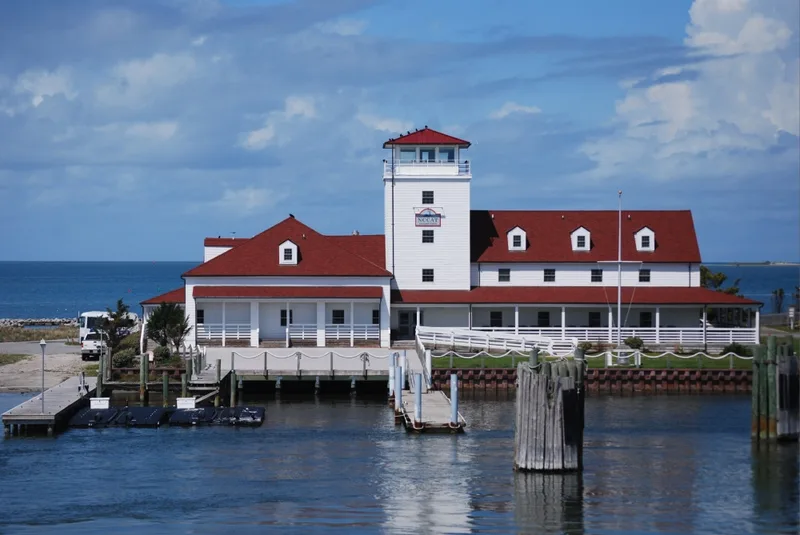
Ocracoke village, on Ocracoke Island off the North Carolina coast, is a settlement of small frame houses set in sandy clearings among dense native vegetation, reached by footpaths rather than named streets. The district's contributing resources were built between 1823 and 1959 and include the 1823 lighthouse, the oldest light still in use on the North Carolina coast, along with the 1942 Coast Guard Station and roughly forty-six primary buildings from 1940 to 1959. The houses follow local traditions, including small scale, brick cisterns, picket fences and family graveyards. Some were reportedly built from timbers salvaged from shipwrecks, such as the Spencer Bungalow of 1937. The district is listed for its social history as the last surviving island community on the Outer Banks, and for its architecture, which continued traditional building practices into the 1950s.
Significance in brief: The nomination argues the district is North Carolina's only surviving, inhabited Outer Banks island settlement to retain much of its historic character. Its traditional frame houses, cisterns, picket fences and family homesteads are presented as a distinctive local building tradition, and the village's isolation until 1959 is presented as the basis for its social-history significance.
Machine-generated summary. This summary was generated by a language model from the official nomination document and has not been reviewed line by line by an editor. It may contain errors. Check the source document before relying on any detail. Source: nomination document (PDF) · National Archives catalog entry. NRHP reference 90001465, listed September 28, 1990. Summary generated October 2026 (model claude-haiku-5-5, prompt v1.1-2026-10-29, confidence medium).
Key facts
| Address | SW tip of Ocracoke Island, around Silver Lake, Ocracoke |
|---|---|
| County | Hyde County |
| Listed | September 28, 1990 |
| Reference number | 90001465 |
| Resource type | District |
| Period of significance | 1823-1959 |
| Architectural style | Vernacular late Victorian, Colonial Revival, late Shingle Style, Bungalow/Craftsman |
| Criteria |
|
| Areas of significance | Exploration/Settlement, Architecture, Social History |
| Level of significance | State |
| Acreage | 200 |
| Coordinates | 35.11385, -75.98382 (NPS GIS) |
What listing means for this property
This is a historic district. Buildings within its boundary are either contributing (they add to the district's significance) or non-contributing. Owners of contributing income-producing buildings can claim the 20% federal rehabilitation tax credit; homeowners should look at state credits. National Register districts impose no design review by themselves; a local historic district ordinance, if one exists, does (the difference explained).
General information, not legal or tax advice. Rules change; confirm with your State Historic Preservation Office or a qualified adviser.
Sources and further reading
- National Park Service, National Register of Historic Places database (snapshot May 2026), reference 90001465.
- Nomination form (PDF, National Archives) — catalog entry
- Wikipedia article (used for cross-checking only; text not reproduced here)
- Wikidata Q19987366
- This listing as JSON
Last updated October 2026. Found an error? See the editorial policy for how to report it.