Palmer Memorial Institute Historic District (Additional Documentation)
Also known as: Charlotte Hawkins Brown Museum, a North Carolina State Historic Site

Why it's listed
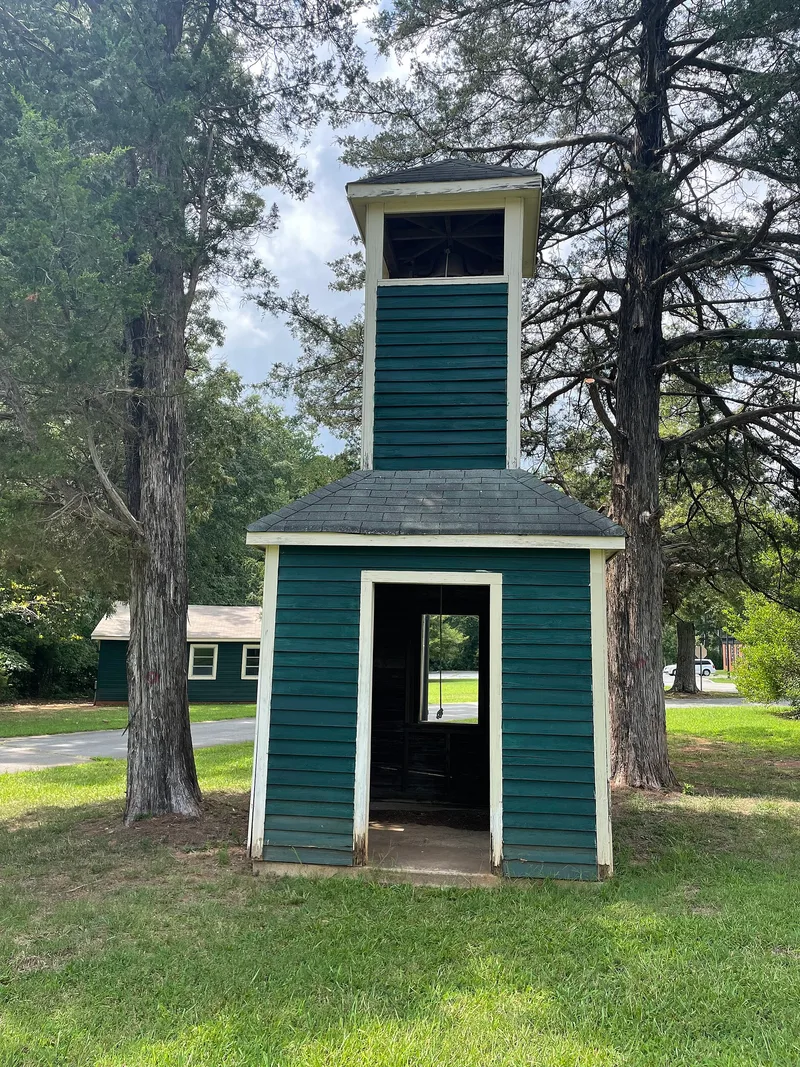
Palmer Memorial Institute Historic District covers just over sixty acres along U.S. 70 in Sedalia, east of Greensboro. Its core is the campus of a private school for Black students, begun in 1902 by Charlotte Hawkins Brown after a mission-supported church school closed. The campus has brick Colonial Revival halls, including Galen Stone Hall and Kimball Hall from 1926-1927, along with frame teachers' cottages, a bell tower, a water tower and Brown's gravesite. Brown's own residence, Canary Cottage, served as a teaching tool in social training. Across the road are Bethany United Church of Christ, which first housed the school, two houses for school staff, and the Andrew farm with its store and former post office. The district was recognized for its link to Brown, who led the school for fifty years, and for its picture of Black private education in North Carolina. Parts of the campus are now a state historic site.
Significance in brief: The district preserves the campus and nearby properties of a private school for Black students that Charlotte Hawkins Brown founded and led for half a century. The school grew from a small rural church school into a campus of over 350 acres and was accredited in 1922-1923. The associated church, teachers' houses and the Andrew farm, store and post office reflect the educational community built around it.
Machine-generated summary. This summary was generated by a language model from the official nomination document and has not been reviewed line by line by an editor. It may contain errors. Check the source document before relying on any detail. Source: nomination document (PDF) · National Archives catalog entry. NRHP reference 88002029, listed October 24, 1988. Summary generated October 2026 (model claude-sonnet-5-5, prompt v1.0-2026-10-29, confidence medium).
Key facts
| Address | 6124-6146 Burlington Rd., Sedalia |
|---|---|
| County | Guilford County |
| Listed | October 24, 1988 |
| Reference number | 88002029 |
| Resource type | District |
| Period of significance | 1901-1952 |
| Architect / builder | Harry Barton (Galen Stone Hall, probably Eliot Hall); Charles C. Hartmann (Massachusetts Congregational Women's Cottage and Carrie M. Stone Cottage); Brice House built by PMI students under industrial training teacher Mr. Driver |
| Architectural style | Colonial Revival, Bungalow, Other: I-house |
| Areas of significance | Black, Education |
| Level of significance | State |
| Status (as stated in the nomination) | Campus buildings range from fair to excellent condition and were being stabilized for restoration as part of the Charlotte Hawkins Brown Memorial State Historic Site; the old store and post office stand vacant. |
| Acreage | 62.7 |
| Coordinates | 36.06792, -79.62428 (NPS GIS) |
What listing means for this property
This is a historic district. Buildings within its boundary are either contributing (they add to the district's significance) or non-contributing. Owners of contributing income-producing buildings can claim the 20% federal rehabilitation tax credit; homeowners should look at state credits. National Register districts impose no design review by themselves; a local historic district ordinance, if one exists, does (the difference explained).
General information, not legal or tax advice. Rules change; confirm with your State Historic Preservation Office or a qualified adviser.
Sources and further reading
- National Park Service, National Register of Historic Places database (snapshot May 2026), reference 88002029.
- Nomination form (PDF, National Archives) — catalog entry
- Wikipedia article (used for cross-checking only; text not reproduced here)
- Wikidata Q7128247
- This listing as JSON
Last updated October 2026. Found an error? See the editorial policy for how to report it.