Helper, Hinton Rowan, House
Also known as: Evans Place

Why it's listed
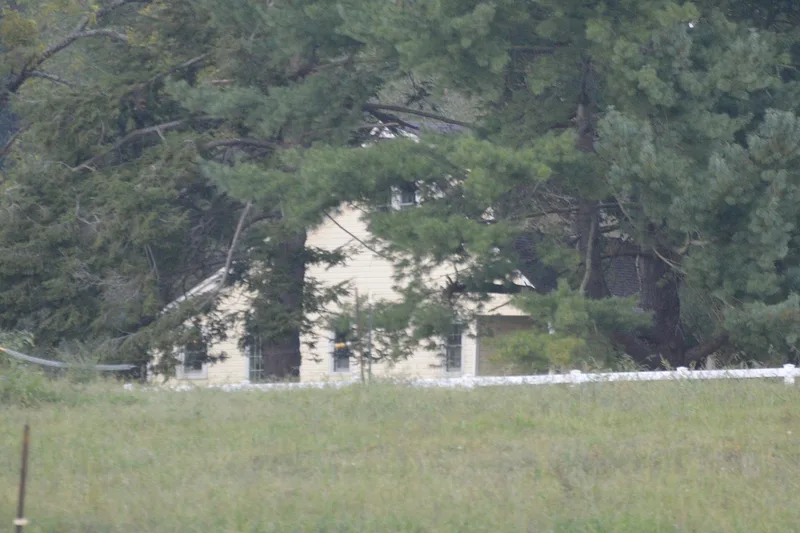
Near Mocksville in Davie County, a modest 1 1/2-story farmhouse on U.S. 64 conceals an earlier log dwelling. Beneath asphalt shingles, fresh clapboard and a shed dormer, the original hewn and natural log supports, wide floorboards, split-log thresholds, rafters and sheathing survive. The front parlor still shows square-timber walls with plaster chinking, and the fireplace and original mantel stand on the east wall. Later additions include a rear kitchen and two rooms at the east end. The house matters because of Hinton Rowan Helper, who spent his first twenty years here. After gold-field years in California, he returned to North Carolina and prepared The Impending Crisis of the South, published in 1857. The book argued that slavery harmed non-slaveholding white Southerners and drew furious reaction in the South. Republicans printed and circulated it widely during the 1860 campaign, and it is described as an influential campaign document. The house is also designated a National Historic Landmark.
Significance in brief: The house is tied to Hinton Rowan Helper, author of The Impending Crisis of the South (1857), an anti-slavery tract aimed at non-slaveholding Southern whites. Republicans reprinted it widely in the 1860 campaign, and it is called a powerful campaign document. Helper spent his first twenty years here and worked on the book while dividing his time between this house and one in Salisbury.
Machine-generated summary. This summary was generated by a language model from the official nomination document and has not been reviewed line by line by an editor. It may contain errors. Check the source document before relying on any detail. Source: nomination document (PDF) · National Archives catalog entry. NRHP reference 73001336, listed November 7, 1973. Summary generated October 2026 (model claude-sonnet-5-5, prompt v1.0-2026-10-29, confidence medium).
Key facts
| Address | U.S. 64 off I-40, Mocksville |
|---|---|
| County | Davie County |
| Listed | November 7, 1973 |
| Reference number | 73001336 |
| Resource type | Building |
| Architect / builder | Daniel Helper (built the log house in 1818, per a supporting memorandum and newspaper article) |
| Areas of significance | Politics/Government |
| Level of significance | National |
| National Historic Landmark | Yes, designated November 7, 1973 |
| Status (as stated in the nomination) | Listed in good condition, on its original site, altered, and occupied as a private residence at the time of nomination. |
| Acreage | 1.5 |
| Coordinates | 35.90708, -80.60451 (NPS GIS) |
What listing means for this property
National Register listing is honorary for a privately owned home: it does not by itself restrict what an owner may do with their own money, and it does not require public access. Restrictions come from local landmark or historic-district ordinances, which are separate (how they differ).
Owner-occupied houses are not eligible for the 20% federal rehabilitation tax credit, which applies to income-producing buildings, but many states offer credits for homeowners. Listing also opens the door to preservation easements and to buying a plaque. Start with what listing means for homeowners, renovating a listed house and selling one.
General information, not legal or tax advice. Rules change; confirm with your State Historic Preservation Office or a qualified adviser.
Sources and further reading
- National Park Service, National Register of Historic Places database (snapshot May 2026), reference 73001336.
- Nomination form (PDF, National Archives) — catalog entry
- Wikipedia article (used for cross-checking only; text not reproduced here)
- Wikidata Q5767697
- This listing as JSON
Last updated October 2026. Found an error? See the editorial policy for how to report it.