Uptown Lexington Historic District
Also known as: See Also:(Former) Davidson Co. Courthouse

Why it's listed
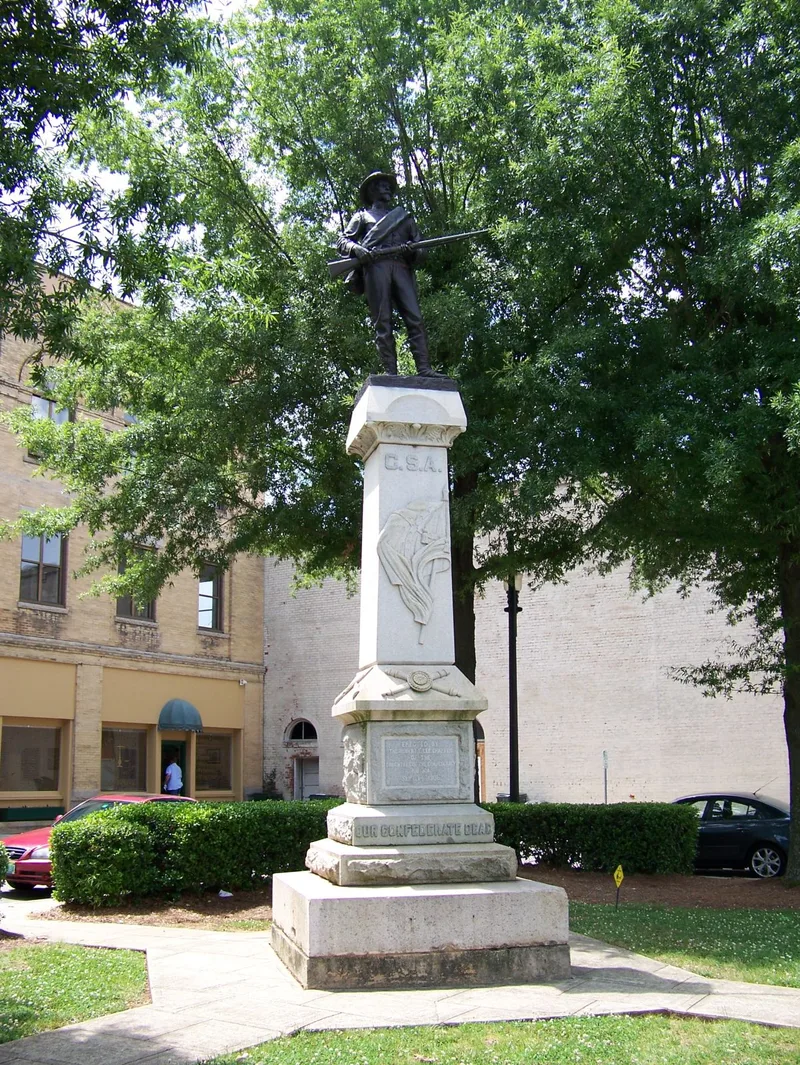
Uptown Lexington Historic District is the commercial and governmental heart of Lexington, North Carolina. It spans parts of five blocks along Main Street, between Third Avenue and Second Street, around Courthouse Square. The square was bought and laid out in 1824 for the new Davidson County seat and is unusual in being divided into four quadrants. The district holds 68 resources, including 64 buildings, three sites and a Confederate monument moved to the square's southeast quadrant after 1929. Most buildings are two-story brick commercial structures dating from about 1890 to 1930. Classical design is prominent, seen in the 1856-58 former courthouse with its Corinthian portico, the Renaissance Revival former March Hotel, and the Neo-Classical Revival former post office of 1911-12. Many shopfronts have been altered, but upper stories largely survive. The district is considered significant for its intact commercial and civic character between 1824 and 1946.
Significance in brief: The district is the historic commercial and governmental center of Lexington, laid out in 1824 as the county seat. It keeps a largely intact collection of commercial buildings, together with the 1856-58 courthouse and the 1911-12 post office. About 82 percent of its resources contribute to its character during the 1824-1946 period of significance.
Machine-generated summary. This summary was generated by a language model from the official nomination document and has not been reviewed line by line by an editor. It may contain errors. Check the source document before relying on any detail. Source: nomination document (PDF) · National Archives catalog entry. NRHP reference 96000570, listed May 16, 1996. Summary generated October 2026 (model claude-sonnet-5-5, prompt v1.0-2026-10-29, confidence medium).
Key facts
| Address | Main St. from 3rd Ave. to 2nd St., Lexington |
|---|---|
| County | Davidson County |
| Listed | May 16, 1996 |
| Reference number | 96000570 |
| Resource type | District |
| Period of significance | 1824-1946 |
| Architect / builder | George Dudley and William Ashley (1856-58 Courthouse); George F. Barber (Raper Building); James Knox Taylor (supervising architect, 1911-12 Post Office) |
| Architectural style | Commercial Style; Classical Revival; Renaissance Revival; Neo-classical Revival |
| Areas of significance | Politics/Government, Commerce, Architecture |
| Level of significance | Local |
| Status (as stated in the nomination) | Most buildings are in good to excellent condition; many first-story shopfronts are altered. The former courthouse is a county history museum and the former post office is a county arts center. |
| Acreage | 13.5 |
| Coordinates | 35.82356, -80.25407 (NPS GIS) |
What listing means for this property
This is a historic district. Buildings within its boundary are either contributing (they add to the district's significance) or non-contributing. Owners of contributing income-producing buildings can claim the 20% federal rehabilitation tax credit; homeowners should look at state credits. National Register districts impose no design review by themselves; a local historic district ordinance, if one exists, does (the difference explained).
General information, not legal or tax advice. Rules change; confirm with your State Historic Preservation Office or a qualified adviser.
Sources and further reading
- National Park Service, National Register of Historic Places database (snapshot May 2026), reference 96000570.
- Nomination form (PDF, National Archives) — catalog entry
- Wikipedia article (used for cross-checking only; text not reproduced here)
- Wikidata Q18357363
- This listing as JSON
Last updated October 2026. Found an error? See the editorial policy for how to report it.