Coinjock Colored School
Also known as: Coinjock Rosenwald School; Crawford Colored School # 7

Why it's listed
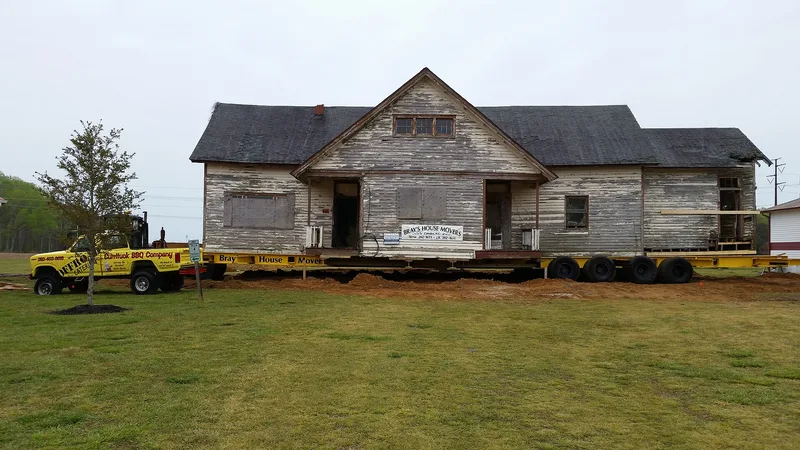
Built on a quarter-acre lot on the west side of the main road through Coinjock, the Coinjock Colored School is a one-story frame building with weatherboard walls, an asphalt-shingled side-gable roof and a projecting gable-front block on its east facade. It was one of three Rosenwald schools erected in Currituck County in the early 1920s, following a standardized North Carolina floor plan designed by Raleigh architect Frank K. Thomson. Two large classrooms were heated by wood stoves, and a bank of large six-over-six windows provided natural light for rural students without electricity. The school served African American children in the Crawford District and was one of few such schools in the county to survive with much of its exterior and plan intact. Its significance lies in its association with African American education during segregation, supported by the Rosenwald Fund's partnership with Booker T. Washington. The building has been vacant for many years and needs roof and window repair.
Significance in brief: The nomination argues the school is significant for its association with African American education in Currituck County from 1920 to 1950, under the Rosenwald Fund program. It states the building is the only surviving Rosenwald school in the county that retains a good deal of its original exterior architectural character and plan.
Machine-generated summary. This summary was generated by a language model from the official nomination document and has not been reviewed line by line by an editor. It may contain errors. Check the source document before relying on any detail. Source: nomination document (PDF) · National Archives catalog entry. NRHP reference 12001156, listed January 9, 2013. Summary generated October 2026 (model claude-haiku-5-5, prompt v1.1-2026-10-29, confidence high).
Key facts
| Address | 4358 Caratoke Hwy., Coinjock |
|---|---|
| County | Currituck County |
| Listed | January 9, 2013 |
| Reference number | 12001156 |
| Resource type | Building |
| Period of significance | 1920-1950 |
| Architect / builder | Simmons, Foreman, carpenter |
| Architectural style | Bungalow/Craftsman |
| Criteria |
|
| Areas of significance | Education, Black |
| Level of significance | Local |
| Status (as stated in the nomination) | Vacant for many years; the form notes roof damage, boarded windows, and interior neglect. |
| Acreage | 0.3 |
| Coordinates | 36.36267, -75.96714 (NPS GIS) |
What listing means for this property
For a publicly owned building or structure, listing mainly matters when federal funds, permits or licences are involved: projects then go through Section 106 review so effects on the property are considered. Listing also strengthens applications for preservation grants and, for leased income-producing uses, can enable the federal rehabilitation tax credit.
Noted as vacant in the nomination. Nomination documents can be decades old; current status may differ. If you are considering buying an empty listed property, read the due-diligence checklist.
General information, not legal or tax advice. Rules change; confirm with your State Historic Preservation Office or a qualified adviser.
Sources and further reading
- National Park Service, National Register of Historic Places database (snapshot May 2026), reference 12001156.
- Nomination form (PDF, National Archives) — catalog entry
- Wikipedia article (used for cross-checking only; text not reproduced here)
- Wikidata Q18206083
- This listing as JSON
Last updated October 2026. Found an error? See the editorial policy for how to report it.