Griers Presbyterian Church and Cemetery

Why it's listed
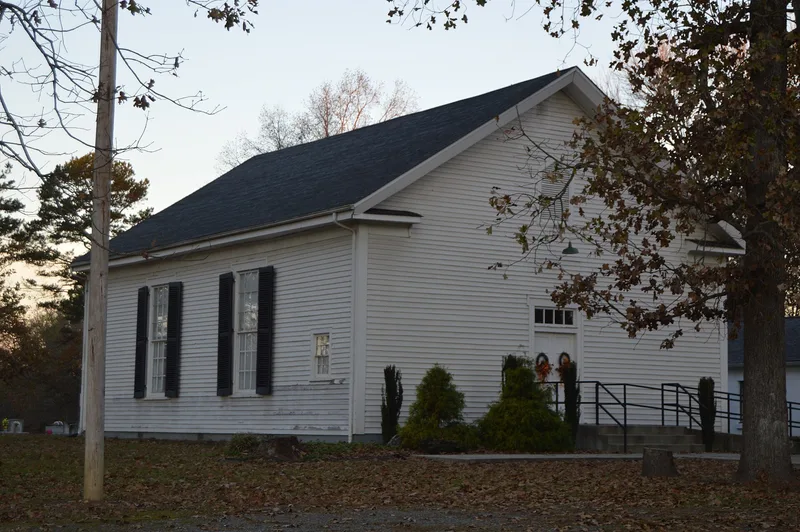
Griers Presbyterian Church is a simple frame building in rural Caswell County, North Carolina, built around 1856 in the Greek Revival temple form. It is one bay wide and two bays deep, with a front gable roof, crossetted door and window surrounds, and an interior with side galleries on classical posts. Its design closely resembles the brick Yanceyville Presbyterian Church of 1850, which has led to speculation that the same builder, Alfred A. Mitchell, was involved. The congregation behind it is thought to have been organized by 1753 and is described as the oldest in the county and in the Orange Presbytery. An earlier church on the congregation's lands burned, and the present building went up on a two-acre lot bought in 1856. It is one of only five antebellum churches surviving in the county. A cemetery with weathered markers lies behind the church, and a 1950s education building is not counted as contributing.
Significance in brief: The church houses a congregation thought to have been organized by 1753, described as the oldest in Caswell County and in the Orange Presbytery. The building is one of only five surviving antebellum churches in the county and a relatively intact rural example of Greek Revival temple-form design. It is also linked to the early settlement of the area and the founding of pre-Revolutionary churches.
Machine-generated summary. This summary was generated by a language model from the official nomination document and has not been reviewed line by line by an editor. It may contain errors. Check the source document before relying on any detail. Source: nomination document (PDF) · National Archives catalog entry. NRHP reference 85003187, listed December 30, 1985. Summary generated October 2026 (model claude-sonnet-5-5, prompt v1.0-2026-10-29, confidence high).
Key facts
| Address | SR 1710, Frogsboro |
|---|---|
| County | Caswell County |
| Listed | December 30, 1985 |
| Reference number | 85003187 |
| Resource type | Building |
| Period of significance | 1800-1899 |
| Architectural style | Greek Revival (temple-form church) |
| Criteria |
|
| Areas of significance | Architecture |
| Level of significance | Local |
| Status (as stated in the nomination) | Occupied and in religious use by an active congregation; the building is described as well preserved, with 1930s and 1950s alterations and a non-contributing mid-20th-century education building. |
| Acreage | 2 |
| Coordinates | 36.34725, -79.21921 (NPS GIS) |
What listing means for this property
Religious properties are listed for their architectural or historical significance, not their religious use. Listing is honorary and does not restrict the congregation's use of the building. The federal rehabilitation credit is generally unavailable unless part of the building is income-producing; some state programmes and preservation grants do cover religious buildings. Federal funding or permits trigger Section 106 review.
General information, not legal or tax advice. Rules change; confirm with your State Historic Preservation Office or a qualified adviser.
Sources and further reading
- National Park Service, National Register of Historic Places database (snapshot May 2026), reference 85003187.
- Nomination form (PDF, National Archives) — catalog entry
- Wikipedia article (used for cross-checking only; text not reproduced here)
- Wikidata Q5608700
- This listing as JSON
Last updated October 2026. Found an error? See the editorial policy for how to report it.