Haynes, Lemuel, House

Why it's listed
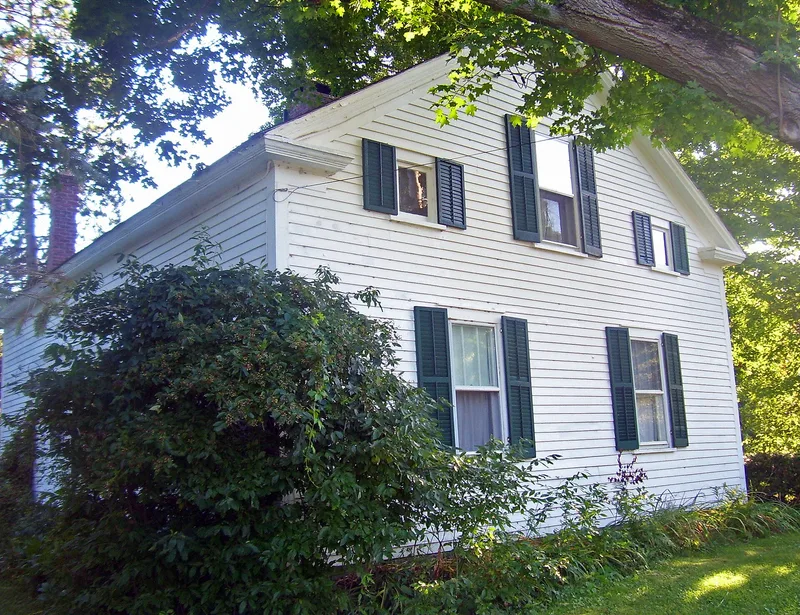
Built in 1793 on Route 149 in South Granville, New York, this small two-story frame house with a cellar is nearly square and has a steep gable roof. Inside, a large first-floor fireplace with a Dutch oven remains in good condition, and wide peg-laid floorboards run throughout. The house was historically restored in 1967 and sits on about two acres. It is best known as the home of Lemuel Haynes, who lived there from 1822 to 1833 while serving as pastor in South Granville. Born in 1753 to a black father and a white mother, Haynes served as a Minuteman and later as a Green Mountain Boy. He was ordained in 1785, described as the first black clergyman ordained in North America, and he led a white congregation in Rutland, Vermont, for thirty years. In 1804 he received a Middlebury College master's degree, the first awarded to a black person in America. He is buried in the village cemetery a mile north of the house.
Significance in brief: The house is tied to Lemuel Haynes, who is described as the first black clergyman ordained in America, the first black pastor of a white congregation, and the first black recipient of a Master of Arts degree. South Granville was his last pastorate, and it holds his congregation, his home and his grave.
Machine-generated summary. This summary was generated by a language model from the official nomination document and has not been reviewed line by line by an editor. It may contain errors. Check the source document before relying on any detail. Source: nomination document (PDF) · National Archives catalog entry. NRHP reference 75001235, listed May 15, 1975. Summary generated October 2026 (model claude-sonnet-5-5, prompt v1.0-2026-10-29, confidence medium).
Key facts
| Address | Rte. 149, South Granville |
|---|---|
| County | Washington County |
| Listed | May 15, 1975 |
| Reference number | 75001235 |
| Resource type | Building |
| Period of significance | 1753-1833 (Haynes); 1822-1833 (Haynes' occupancy of house) |
| Architectural style | New England frame structure |
| Areas of significance | Military, Black, Politics/Government, Religion |
| Level of significance | National |
| National Historic Landmark | Yes, designated May 15, 1975 |
| Status (as stated in the nomination) | Listed in good condition, altered, on its original site, and historically restored in 1967. The form checks private ownership, private residence and museum uses. |
| Acreage | 2 |
| Coordinates | 43.37095, -73.28326 (NPS GIS) |
What listing means for this property
National Register listing is honorary for a privately owned home: it does not by itself restrict what an owner may do with their own money, and it does not require public access. Restrictions come from local landmark or historic-district ordinances, which are separate (how they differ).
Owner-occupied houses are not eligible for the 20% federal rehabilitation tax credit, which applies to income-producing buildings, but many states offer credits for homeowners. Listing also opens the door to preservation easements and to buying a plaque. Start with what listing means for homeowners, renovating a listed house and selling one.
General information, not legal or tax advice. Rules change; confirm with your State Historic Preservation Office or a qualified adviser.
Sources and further reading
- National Park Service, National Register of Historic Places database (snapshot May 2026), reference 75001235.
- Nomination form (PDF, National Archives) — catalog entry
- Wikipedia article (used for cross-checking only; text not reproduced here)
- Wikidata Q6521558
- This listing as JSON
Last updated October 2026. Found an error? See the editorial policy for how to report it.