General Electric Research Laboratory

Why it's listed
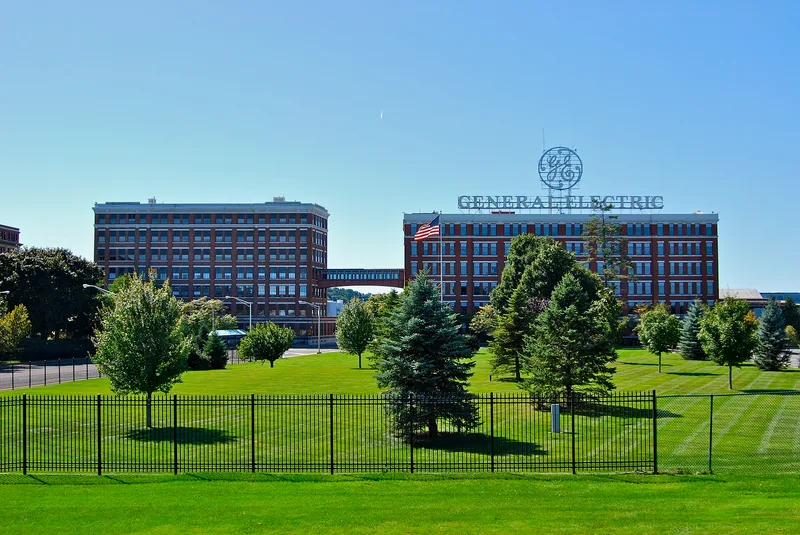
General Electric's research laboratory in Schenectady, New York, is recognized as the first truly industrial research facility in the United States. It was officially established in 1900, when company president E. W. Rice invited Willis R. Whitney, a young MIT chemistry instructor, to create a laboratory devoted exclusively to original research. Whitney designed and led it for more than thirty years. The laboratory began in a small garage with about a dozen workers and grew into three facilities employing thousands of scientists, engineers and technicians. Unlike earlier experimental shops, it organized scientific research on a systematic basis, pursuing both pure science related to company interests and the practical use of its discoveries. Irving Langmuir, a Nobel Prize winner, and William D. Coolidge made major contributions to the physical sciences there. The work is now housed in three buildings: one on the edge of town and two inside the main plant, one of them Building No. 5, the oldest surviving research laboratory.
Significance in brief: The nomination argues that this was the first truly industrial research facility in the United States, and the first to organize scientific research on a systematic basis. It combined pure science with practical application of new products and processes. Scientists such as Nobel laureate Irving Langmuir and William D. Coolidge produced important work there.
Machine-generated summary. This summary was generated by a language model from the official nomination document and has not been reviewed line by line by an editor. It may contain errors. Check the source document before relying on any detail. Source: nomination document (PDF) · National Archives catalog entry. NRHP reference 75001227, listed May 15, 1975. Summary generated October 2026 (model claude-sonnet-5-5, prompt v1.0-2026-10-29, confidence medium).
Key facts
| Address | General Electric main plant, Schenectady |
|---|---|
| County | Schenectady County |
| Listed | May 15, 1975 |
| Reference number | 75001227 |
| Resource type | Building |
| Period of significance | 1900- |
| Areas of significance | Science |
| Level of significance | National |
| National Historic Landmark | Yes, designated May 15, 1975 |
| Status (as stated in the nomination) | Listed as occupied, privately owned, in industrial and scientific use; the form describes the buildings as unaltered and on their original sites, and notes that all three possess integrity. |
| Coordinates | 42.80968, -73.95376 (NPS GIS) |
What listing means for this property
National Register listing is honorary: it recognises significance and does not restrict what a private owner may do without federal money or permits. It unlocks the 20% federal rehabilitation tax credit for income-producing buildings, state credits in many states, and Section 106 review when federal agencies are involved. See what listing means in practice.
General information, not legal or tax advice. Rules change; confirm with your State Historic Preservation Office or a qualified adviser.
Sources and further reading
- National Park Service, National Register of Historic Places database (snapshot May 2026), reference 75001227.
- Nomination form (PDF, National Archives) — catalog entry
- Wikipedia article (used for cross-checking only; text not reproduced here)
- Wikidata Q5531879
- This listing as JSON
Last updated October 2026. Found an error? See the editorial policy for how to report it.