Trinity Church

Why it's listed
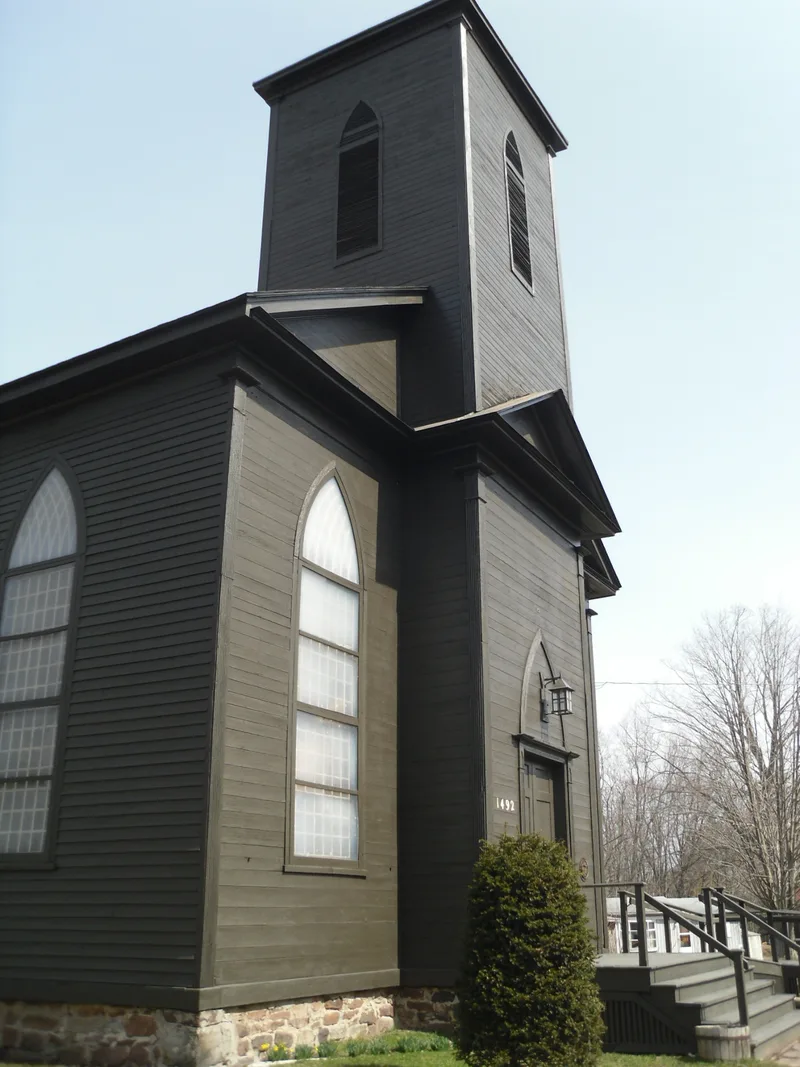
Trinity Church is a small wood-frame Episcopal church in Constantia, a hamlet on the northern shore of Oneida Lake in Oswego County. Completed in 1831 on land donated by George Scriba, it has a flush-board facade, clapboard sides, a rough-cut stone foundation and an engaged square tower with fluted corner pilasters. Pointed arches over doors, windows and vents add Gothic touches to its Federal and Neoclassical form. Scriba, a German-born businessman, held a large tract known as Scriba's Patent and built the area's first frame house. The parish was named for Old Trinity Church in New York City, and the building was consecrated in 1833. It fell into disrepair after 1890, with services held in homes for about twenty years, then reopened in 1910. Interior changes in 1866 created a recessed chancel. The property also includes a graveyard holding many Scriba family members. It remains an outstanding rural parish church of the early nineteenth century.
Significance in brief: The nomination calls it an excellent example of a vernacular Federal period church that combines Neoclassical and Gothic features. It is one of the oldest surviving churches in the region and is tied to George Scriba, who developed the area through Scriba's Patent. It is also one of the few remaining properties associated with the Scriba family.
Machine-generated summary. This summary was generated by a language model from the official nomination document and has not been reviewed line by line by an editor. It may contain errors. Check the source document before relying on any detail. Source: nomination document (PDF) · National Archives catalog entry. NRHP reference 82001231, listed October 29, 1982. Summary generated October 2026 (model claude-sonnet-5-5, prompt v1.0-2026-10-29, confidence medium).
Key facts
| Address | NY 49, Constantia |
|---|---|
| County | Oswego County |
| Listed | October 29, 1982 |
| Reference number | 82001231 |
| Resource type | Building |
| Architectural style | Federal, with Neoclassical form and Gothic Revival influence |
| Areas of significance | Exploration/Settlement, Architecture |
| Level of significance | Local |
| Status (as stated in the nomination) | Condition listed as good, altered, original site; the church is occupied and has a small active congregation. The graveyard is not currently maintained. |
| Acreage | 2 |
| Coordinates | 43.24795, -76.00774 (NPS GIS) |
What listing means for this property
Religious properties are listed for their architectural or historical significance, not their religious use. Listing is honorary and does not restrict the congregation's use of the building. The federal rehabilitation credit is generally unavailable unless part of the building is income-producing; some state programmes and preservation grants do cover religious buildings. Federal funding or permits trigger Section 106 review.
General information, not legal or tax advice. Rules change; confirm with your State Historic Preservation Office or a qualified adviser.
Sources and further reading
- National Park Service, National Register of Historic Places database (snapshot May 2026), reference 82001231.
- Nomination form (PDF, National Archives) — catalog entry
- Wikipedia article (used for cross-checking only; text not reproduced here)
- Wikidata Q7842658
- This listing as JSON
Last updated October 2026. Found an error? See the editorial policy for how to report it.