Brown, John, Farm and Gravesite

Why it's listed
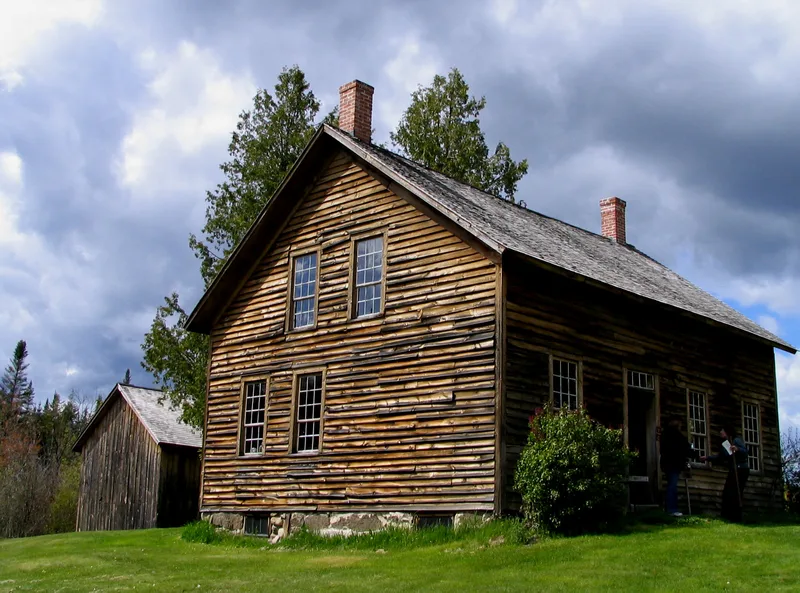
John Brown's farm in North Elba, near Lake Placid, is a 214-acre property that includes a modest one-and-one-half-story clapboard farmhouse and a small burial plot. Brown arrived in the Adirondacks in 1849 after learning that philanthropist Gerrit Smith had set aside land for Black farm families. He bought 244 acres in 1850, first lived in a log house, and in 1855 moved into a four-room frame house built by his son-in-law. He farmed hay, rye, oats and potatoes, and won prizes for his Devon cattle. The nomination presents the farm as both a cherished home and a practical expression of his concern for former slaves. After his execution in 1859, his body was returned and buried beside a large boulder in front of the house. The graves of Brown, two of his sons and ten followers remain there. The site is now a state-run museum, and a late 19th-century porch was removed in the mid-twentieth century.
Significance in brief: The nomination argues the farm was abolitionist John Brown's beloved home and a place where he put humanitarian ideals into practice by helping Black settlers on land set aside by Gerrit Smith. He is buried on the property beside a large boulder, along with two sons and ten followers.
Machine-generated summary. This summary was generated by a language model from the official nomination document and has not been reviewed line by line by an editor. It may contain errors. Check the source document before relying on any detail. Source: nomination document (PDF) · National Archives catalog entry. NRHP reference 72000840, listed June 19, 1972. Summary generated October 2026 (model claude-sonnet-5-5, prompt v1.0-2026-10-29, confidence medium).
Key facts
| Address | John Brown Rd., Lake Placid |
|---|---|
| County | Essex County |
| Listed | June 19, 1972 |
| Reference number | 72000840 |
| Resource type | District |
| Period of significance | 19th Century |
| Architect / builder | Four-room frame house erected for Brown by his son-in-law (not named) |
| Areas of significance | Social History, Black, Politics/Government |
| Level of significance | National, State |
| National Historic Landmark | Yes, designated August 5, 1998 |
| Status (as stated in the nomination) | Operated as a museum open to the public during specified hours; condition listed as good, altered, on its original site. |
| Acreage | 270.6 |
| Coordinates | 44.24976, -73.97156 (NPS GIS) |
What listing means for this property
This is a historic district. Buildings within its boundary are either contributing (they add to the district's significance) or non-contributing. Owners of contributing income-producing buildings can claim the 20% federal rehabilitation tax credit; homeowners should look at state credits. National Register districts impose no design review by themselves; a local historic district ordinance, if one exists, does (the difference explained).
General information, not legal or tax advice. Rules change; confirm with your State Historic Preservation Office or a qualified adviser.
Sources and further reading
- National Park Service, National Register of Historic Places database (snapshot May 2026), reference 72000840.
- Nomination form (PDF, National Archives) — catalog entry
- Wikipedia article (used for cross-checking only; text not reproduced here)
- Wikidata Q2487907
- This listing as JSON
Last updated October 2026. Found an error? See the editorial policy for how to report it.