Waucantuck Mill Complex

Why it's listed
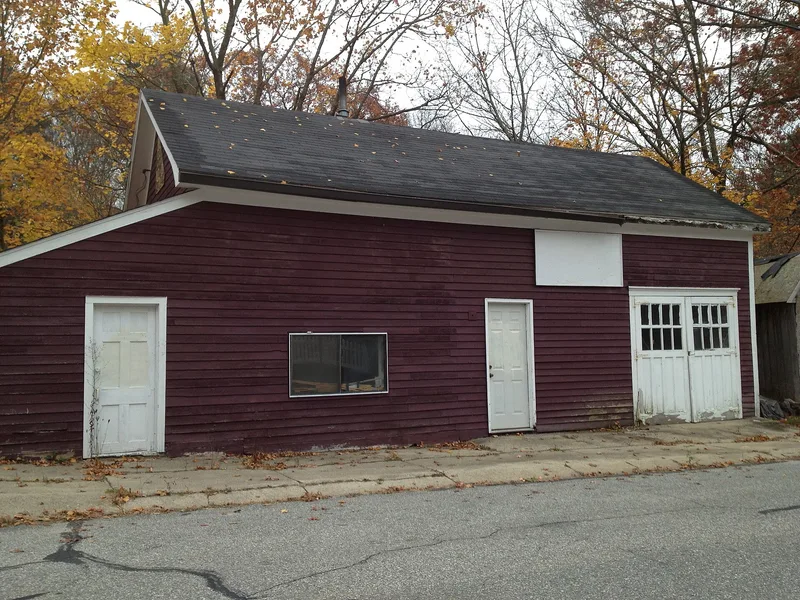
Beside the West River in Uxbridge, this woolen mill complex grew from a small wood-frame factory into a multi-building industrial plant. Luke Taft dammed the river in 1824 and opened his first mill in 1825 to make satinets. After a fire, the present three-storey Main Building went up in 1838. The Wheelock family took over, renamed the works Waucantuck Mill, made cassimeres, added Uxbridge's first steam engine in 1854, and expanded in the 1870s. Brick boiler, picker and storage buildings joined the original structure. Around 1900 Charles A. Root assumed control, and after the firm was reorganized in 1905 it grew to six times its original size by 1928, employing over 500 workers on three shifts. Later additions were utilitarian. Together the buildings preserve examples of local industrial architecture and show how Uxbridge's textile industry developed from the 1820s through the early twentieth century.
Significance in brief: The complex is tied to the early establishment of woolen manufacturing in Uxbridge, to the Taft and Wheelock families who developed the industry locally, and to the rapid growth of the town's woolen industry in the early twentieth century. It keeps architectural elements from every period of its development and retains integrity of location, design, setting, materials and workmanship.
Machine-generated summary. This summary was generated by a language model from the official nomination document and has not been reviewed line by line by an editor. It may contain errors. Check the source document before relying on any detail. Source: nomination document (PDF) · National Archives catalog entry. NRHP reference 84002921, listed January 20, 1984. Summary generated October 2026 (model claude-sonnet-5-5, prompt v1.0-2026-10-29, confidence medium).
Key facts
| Address | Mendon and Patrick Henry Sts., Uxbridge |
|---|---|
| County | Worcester County |
| Listed | January 20, 1984 |
| Reference number | 84002921 |
| Resource type | Building |
| Period of significance | 1838-1930 |
| Criteria |
|
| Areas of significance | Industry, Architecture |
| Level of significance | State |
| Acreage | 6 |
| Coordinates | 42.08332, -71.60757 (NPS GIS) |
What listing means for this property
For an income-producing building, listing (individually or as a contributing building in a district) is the gateway to the 20% federal rehabilitation tax credit on qualified rehabilitation costs, often stackable with state credits. Work claiming the credit must follow the Secretary of the Interior's Standards and be approved in advance.
Listing does not restrict a private owner acting without federal money or permits; where federal funding or licensing is involved, Section 106 review applies.
General information, not legal or tax advice. Rules change; confirm with your State Historic Preservation Office or a qualified adviser.
Sources and further reading
- National Park Service, National Register of Historic Places database (snapshot May 2026), reference 84002921.
- Nomination form (PDF, National Archives) — catalog entry
- Wikipedia article (used for cross-checking only; text not reproduced here)
- Wikidata Q7975112
- This listing as JSON
Last updated October 2026. Found an error? See the editorial policy for how to report it.