Petersham Common Historic District

Why it's listed
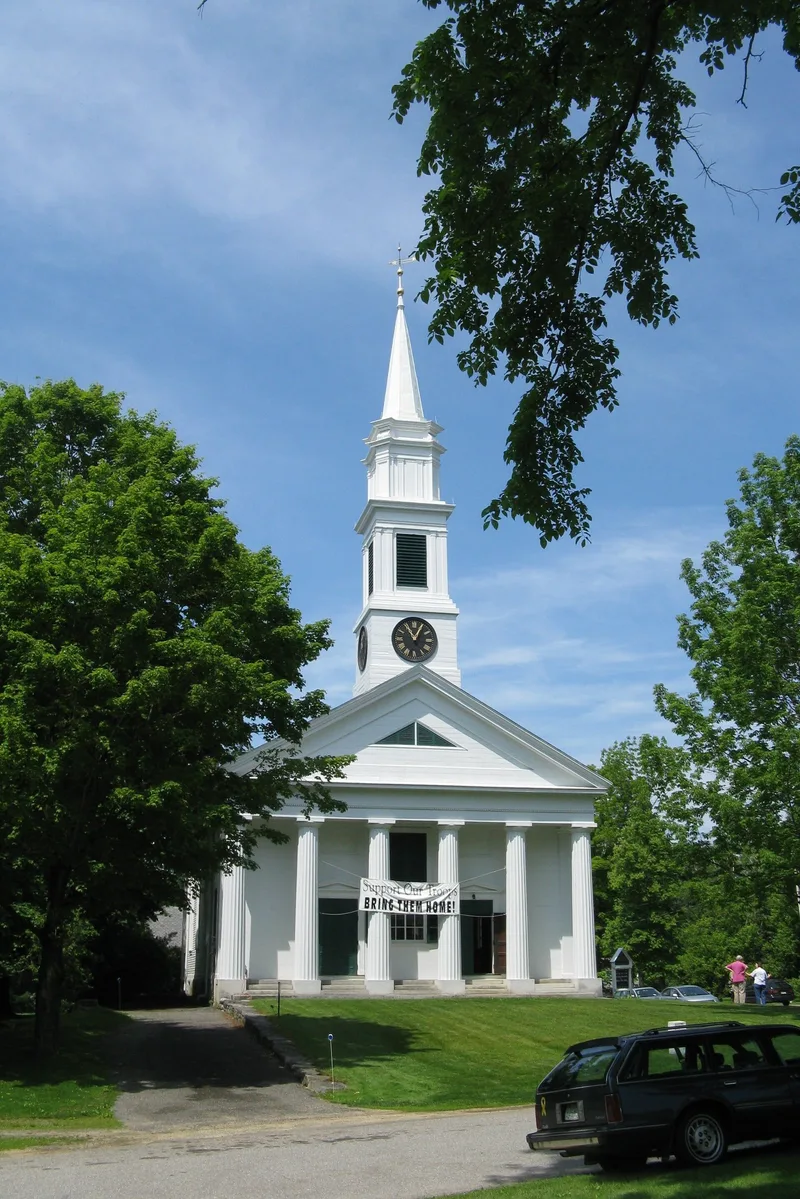
Petersham Common is the historic center of a small hill town in northwest Worcester County, Massachusetts. The common was laid out in 1733 with 72 settling lots, and the surrounding district takes in about fifty acres and forty-five structures along Common Street, North and South Main Streets and parts of Athol Road and North Street. Most buildings are wood frame and date before 1850, and many are Greek Revival, with a few Federal houses, including one from 1768. Public buildings around the green include the Unitarian Church, Town Hall, the Brick Building and the Memorial Library. Late nineteenth century additions such as the Nichewaug Hotel and the Fiske House reflect the arrival of summer visitors. The common was the site of the first meeting house in 1736 and of gatherings in 1773 and 1775. Residents have worked to protect it since 1878, and local historic district protection began in 1967. The district is significant for its intact village setting and its architecture.
Significance in brief: The district keeps its integrity of setting, design, materials and workmanship, with mostly wood frame buildings and large lots opening to open land. The common has been the focus of town civic, religious and social life since settlement in the eighteenth century. Its primary period of significance is the first half of the nineteenth century, and it is also considered likely to hold historic archaeological resources.
Machine-generated summary. This summary was generated by a language model from the official nomination document and has not been reviewed line by line by an editor. It may contain errors. Check the source document before relying on any detail. Source: nomination document (PDF) · National Archives catalog entry. NRHP reference 82004481, listed May 11, 1982. Summary generated October 2026 (model claude-sonnet-5-5, prompt v1.0-2026-10-29, confidence medium).
Key facts
| Address | MA 32/122, Petersham |
|---|---|
| County | Worcester County |
| Listed | May 11, 1982 |
| Reference number | 82004481 |
| Resource type | District |
| Period of significance | 1800-1899 |
| Architect / builder | Multiple, including Joseph G. Parmenter, Edmund Wilson, William G. Rantoul, Charles Frederick Bosworth, Arthur H. Brook, Jr., Samson Wetherell and Benjamin F. Hamilton |
| Architectural style | Predominantly Greek Revival, with Federal, Georgian, Queen Anne, Shingle Style, Richardsonian Romanesque and Colonial Revival buildings |
| Criteria |
|
| Areas of significance | Community Planning and Development, Exploration/Settlement, Architecture |
| Level of significance | Local |
| Status (as stated in the nomination) | Described as retaining the character of a New England village with few intrusions; the common is still used for civic, religious, social and recreational activities. Buildings remain in occupied use as homes, a store, a library, churches and a town hall. |
| Acreage | 47 |
| Coordinates | 42.49108, -72.18534 (NPS GIS) |
What listing means for this property
This is a historic district. Buildings within its boundary are either contributing (they add to the district's significance) or non-contributing. Owners of contributing income-producing buildings can claim the 20% federal rehabilitation tax credit; homeowners should look at state credits. National Register districts impose no design review by themselves; a local historic district ordinance, if one exists, does (the difference explained).
General information, not legal or tax advice. Rules change; confirm with your State Historic Preservation Office or a qualified adviser.
Sources and further reading
- National Park Service, National Register of Historic Places database (snapshot May 2026), reference 82004481.
- Nomination form (PDF, National Archives) — catalog entry
- Wikipedia article (used for cross-checking only; text not reproduced here)
- Wikidata Q7178220
- This listing as JSON
Last updated October 2026. Found an error? See the editorial policy for how to report it.