Kennicott's Grove
Also known as: The Grove; The Robert Kennicott House

Why it's listed
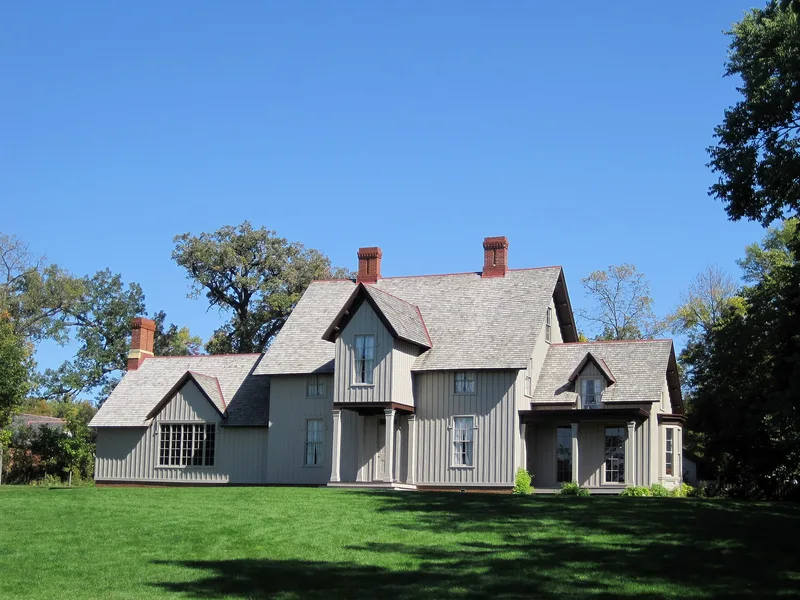
Kennicott's Grove is a wooded tract of marsh, thicket and open land in Glenview, Illinois, settled in 1836 when Dr. John Kennicott brought his family there. The original holding exceeded 250 acres and included log cabins, orchards, a peony nursery, bee hives and a spring-fed pond. Dr. Kennicott's house, built in 1854 as a modified Gothic cottage with board and batten siding, still stands and is occupied. The property matters chiefly for his son Robert Kennicott, a young naturalist who collected specimens here for the Smithsonian Institution, helped found the Chicago Academy of Sciences, and explored Arctic North America. His reports from Alaska influenced the U.S. purchase of that territory. Dr. John Kennicott was an early physician, nurseryman and editor who promoted land grant colleges and a federal agriculture department. Novelist Donald Culross Peattie later wrote A Prairie Grove here. The tract also preserves old oaks and wetland habitat.
Significance in brief: The nomination argues the Grove was the home and outdoor laboratory of Robert Kennicott, an early Illinois naturalist whose Alaska reports influenced the U.S. purchase of that territory. It was also a prototype of early Illinois settlement, shaped by Dr. John Kennicott's work in medicine, nursery farming and agricultural reform. Finally, it is valued as a surviving natural heirloom of prairie grove woodland.
Machine-generated summary. This summary was generated by a language model from the official nomination document and has not been reviewed line by line by an editor. It may contain errors. Check the source document before relying on any detail. Source: nomination document (PDF) · National Archives catalog entry. NRHP reference 73000698, listed August 13, 1973. Summary generated October 2026 (model claude-sonnet-5-5, prompt v1.0-2026-10-29, confidence medium).
Key facts
| Address | Milwaukee and Lake Aves., Glenview |
|---|---|
| County | Cook County |
| Listed | August 13, 1973 |
| Reference number | 73000698 |
| Resource type | Building |
| Period of significance | 19th Century |
| Architectural style | Modified Gothic cottage (Dr. John Kennicott's 1854 house, with board and batten siding) |
| Areas of significance | Education, Science, Agriculture |
| Level of significance | National, State, Local |
| National Historic Landmark | Yes, designated January 7, 1976 |
| Status (as stated in the nomination) | The 1854 Kennicott house is described as in excellent condition and occupied. The present Grove is about 70 acres of woodland, marshland and thicket plus about 70 acres of open land, with several private houses and some nearby subdivision intrusions. |
| Acreage | 140 |
| Coordinates | 42.08217, -87.85894 (NPS GIS) |
What listing means for this property
National Register listing is honorary: it recognises significance and does not restrict what a private owner may do without federal money or permits. It unlocks the 20% federal rehabilitation tax credit for income-producing buildings, state credits in many states, and Section 106 review when federal agencies are involved. See what listing means in practice.
General information, not legal or tax advice. Rules change; confirm with your State Historic Preservation Office or a qualified adviser.
Sources and further reading
- National Park Service, National Register of Historic Places database (snapshot May 2026), reference 73000698.
- Nomination form (PDF, National Archives) — catalog entry
- Wikipedia article (used for cross-checking only; text not reproduced here)
- Wikidata Q6390902
- This listing as JSON
Last updated October 2026. Found an error? See the editorial policy for how to report it.