Western and Atlantic Railroad Tunnel at Tunnel Hill
Also known as: Chetoogeta Mountain Tunnel; Tunnel Hill Tunnel

Why it's listed
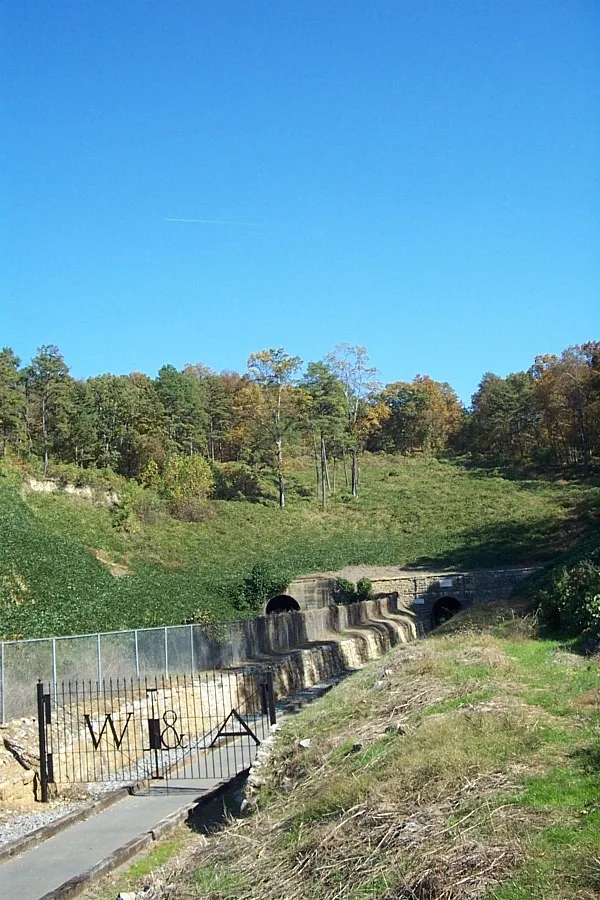
Cut through Chetoogeta Mountain in northwest Georgia between 1848 and 1850, this 1,477-foot tunnel carried the Western and Atlantic Railroad beneath Tunnel Hill Ridge. Its walls combine bedrock, rough limestone and brick, topped by a brick barrel vault, and each end has a limestone portal shaped like a simplified Roman triumphal arch with marble plaques naming the governor, engineers and contractor. Crews worked largely by hand with picks, shovels and hand-drills, and many were enslaved African Americans. The tunnel completed the state-owned line between Atlanta and Chattanooga, and it is described as the first railroad tunnel in Georgia and the South. Both Confederate and Union forces fortified and fought over it during the Civil War. A larger parallel tunnel opened in 1927-28, and the original was abandoned. The City of Tunnel Hill acquired it in 1996 and has since cleared vegetation, stabilized the vault and controlled water seepage, planning public recreational use.
Significance in brief: The nomination argues the tunnel was the last link in Georgia's state-owned Atlanta-to-Chattanooga railroad and the first railroad tunnel in Georgia and the antebellum South. It is also presented as a rare, intact example of mid-19th-century tunnel engineering, built largely by hand with enslaved labor. It also had Civil War importance, though related features are not yet documented.
Machine-generated summary. This summary was generated by a language model from the official nomination document and has not been reviewed line by line by an editor. It may contain errors. Check the source document before relying on any detail. Source: nomination document (PDF) · National Archives catalog entry. NRHP reference 01001431, listed January 11, 2002. Summary generated October 2026 (model claude-sonnet-5-5, prompt v1.0-2026-10-29, confidence high).
Key facts
| Address | Western and Atlantic Railroad, Tunnel Hill |
|---|---|
| County | Whitfield County |
| Listed | January 11, 2002 |
| Reference number | 01001431 |
| Resource type | Structure |
| Period of significance | 1850-1928 |
| Architect / builder | William L. Mitchell, Esq., Chief Engineer; Benjamin C. Morse, Principal Assistant Engineer; B.E. Wells, Assistant Engineer; Jonathon (John) D. Gray & Co., Contractor |
| Architectural style | No style |
| Criteria |
|
| Areas of significance | Engineering, Transportation |
| Level of significance | National |
| Status (as stated in the nomination) | Bypassed and abandoned after a parallel tunnel was built in 1927-28; rails removed. The city owns it and is stabilizing it and converting it to a recreational and historical site. |
| Acreage | 2.5 |
| Coordinates | 34.83863, -85.03098 (NPS GIS) |
What listing means for this property
National Register listing is honorary: it recognises significance and does not restrict what a private owner may do without federal money or permits. It unlocks the 20% federal rehabilitation tax credit for income-producing buildings, state credits in many states, and Section 106 review when federal agencies are involved. See what listing means in practice.
Noted as vacant in the nomination. Nomination documents can be decades old; current status may differ. If you are considering buying an empty listed property, read the due-diligence checklist.
General information, not legal or tax advice. Rules change; confirm with your State Historic Preservation Office or a qualified adviser.
Sources and further reading
- National Park Service, National Register of Historic Places database (snapshot May 2026), reference 01001431.
- Nomination form (PDF, National Archives) — catalog entry
- Wikipedia article (used for cross-checking only; text not reproduced here)
- Wikidata Q5094183
- This listing as JSON
Last updated October 2026. Found an error? See the editorial policy for how to report it.