Strother's Farm
Also known as: Massee Lane/Camellia Gardens

Why it's listed
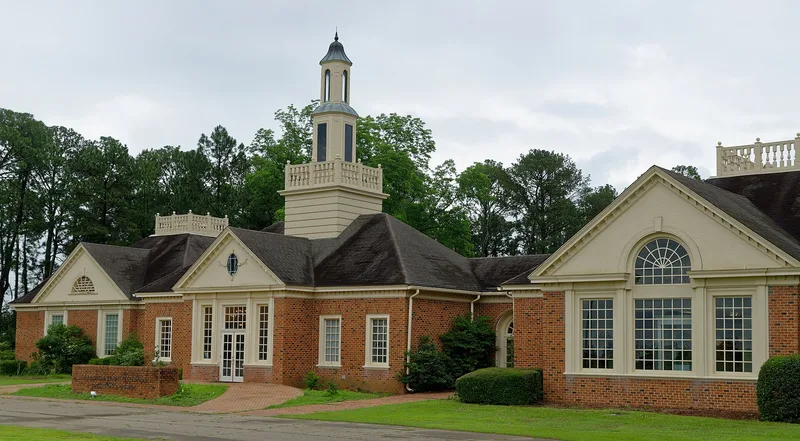
Massee Lane is a pair of formal gardens set in front of and behind a Williamsburg-style headquarters building on Route 3 near Fort Valley. The land was once part of Needham Massee's plantation, settled in 1827. Dave Strother acquired a portion in the early 1900s and grew peaches until a 1936 storm destroyed his farm. Rather than replant, he began designing formal camellia gardens. Brick walks run throughout, and millstones and mile posts often mark the paths. Besides camellias, the plantings include daffodils, day lilies, magnolias, gardenias, Confederate jasmines, tea olives and roses. Marshallville hosted several large camellia shows in the 1940s and 1950s. In 1966 Strother donated his farm and a sum of cash for a headquarters building to the American Camellia Society, which has used it since. The gardens were listed as an expression of the area's interest in landscape architecture, despite their relatively recent date. The grounds are in excellent condition.
Significance in brief: The nomination argues the gardens are one of the highest expressions of Marshallville's interest in landscape architecture. Camellias came to the community around 1850, and small formal gardens survive near many houses. Although the period of significance is less than 50 years old, the form says the gardens merit inclusion for their great artistic value and their link to a long-standing community interest.
Machine-generated summary. This summary was generated by a language model from the official nomination document and has not been reviewed line by line by an editor. It may contain errors. Check the source document before relying on any detail. Source: nomination document (PDF) · National Archives catalog entry. NRHP reference 80004448, listed November 25, 1980. Summary generated October 2026 (model claude-sonnet-5-5, prompt v1.0-2026-10-29, confidence medium).
Key facts
| Address | Rt. 3, Fort Valley |
|---|---|
| County | Peach County |
| Listed | November 25, 1980 |
| Reference number | 80004448 |
| Resource type | Building |
| Architect / builder | Dave Strother |
| Architectural style | Williamsburg style (headquarters building) |
| Areas of significance | Landscape Architecture |
| Level of significance | State |
| Status (as stated in the nomination) | Described as in excellent condition; current use is botanical garden and museum, and it serves as the headquarters of the American Camellia Society. |
| Acreage | 8.5 |
| Coordinates | 32.48840, -83.92582 (NPS GIS) |
What listing means for this property
National Register listing is honorary for a privately owned home: it does not by itself restrict what an owner may do with their own money, and it does not require public access. Restrictions come from local landmark or historic-district ordinances, which are separate (how they differ).
Owner-occupied houses are not eligible for the 20% federal rehabilitation tax credit, which applies to income-producing buildings, but many states offer credits for homeowners. Listing also opens the door to preservation easements and to buying a plaque. Start with what listing means for homeowners, renovating a listed house and selling one.
General information, not legal or tax advice. Rules change; confirm with your State Historic Preservation Office or a qualified adviser.
Sources and further reading
- National Park Service, National Register of Historic Places database (snapshot May 2026), reference 80004448.
- Nomination form (PDF, National Archives) — catalog entry
- Wikidata Q134440881
- This listing as JSON
Last updated October 2026. Found an error? See the editorial policy for how to report it.