Liberty Theater

Why it's listed
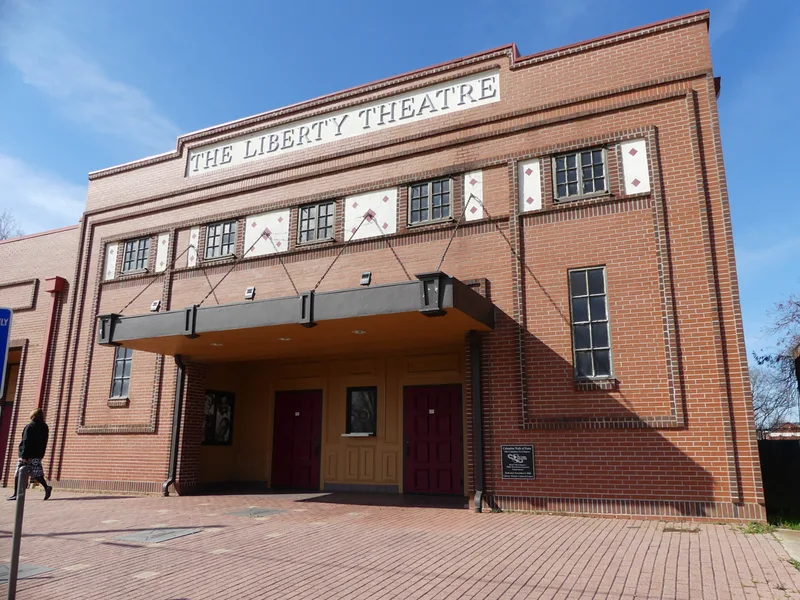
Built in 1925 at 821 Eighth Avenue in Columbus, Georgia, the Liberty Theater is a solid brick building with a stage, a balcony over about one-third of the auditorium, and original folding seats. It was built by the Martin Theater chain as the city's first theater for Black audiences and was one of few such theaters in Georgia. For decades it was the main place in Columbus for Black residents to see films, revues, vaudeville and concerts outside church, school and fraternal halls. Blues singer "Ma" Rainey, a Columbus native known as the "Mother of the Blues," performed there often, and other noted entertainers are associated with it. A major 1955 remodeling covered the original ornamental brick front with tile, plastic and glass and replaced the marquee. The theater closed in 1973 after integration opened other local theaters to all, and it now stands vacant.
Significance in brief: The nomination argues the theater is significant in music and theater history. It hosted jazz and blues performers, notably Columbus native "Ma" Rainey, and was the city's first theater built for Black patrons. It was the main place in Columbus for Black audiences to enjoy cultural performances.
Machine-generated summary. This summary was generated by a language model from the official nomination document and has not been reviewed line by line by an editor. It may contain errors. Check the source document before relying on any detail. Source: nomination document (PDF) · National Archives catalog entry. NRHP reference 84001208, listed May 22, 1984. Summary generated October 2026 (model claude-sonnet-5-5, prompt v1.0-2026-10-29, confidence high).
Key facts
| Address | 821 8th Ave., Columbus |
|---|---|
| County | Muscogee County |
| Listed | May 22, 1984 |
| Reference number | 84001208 |
| Resource type | Building |
| Period of significance | 1900- |
| Architect / builder | Unknown |
| Criteria |
|
| Areas of significance | Performing Arts |
| Level of significance | State |
| Status (as stated in the nomination) | Closed as a theater in 1973 and listed as vacant and unoccupied; it was remodeled in 1955 with a new front facade, and the owners hope to reopen it for performing arts programs for young people. |
| Acreage | 0.2 |
| Coordinates | 32.46188, -84.98268 (NPS GIS) |
What listing means for this property
For an income-producing building, listing (individually or as a contributing building in a district) is the gateway to the 20% federal rehabilitation tax credit on qualified rehabilitation costs, often stackable with state credits. Work claiming the credit must follow the Secretary of the Interior's Standards and be approved in advance.
Listing does not restrict a private owner acting without federal money or permits; where federal funding or licensing is involved, Section 106 review applies.
Noted as vacant in the nomination. Nomination documents can be decades old; current status may differ. If you are considering buying an empty listed property, read the due-diligence checklist.
General information, not legal or tax advice. Rules change; confirm with your State Historic Preservation Office or a qualified adviser.
Sources and further reading
- National Park Service, National Register of Historic Places database (snapshot May 2026), reference 84001208.
- Nomination form (PDF, National Archives) — catalog entry
- Wikidata Q42431750
- This listing as JSON
Last updated October 2026. Found an error? See the editorial policy for how to report it.