Vann House

Why it's listed
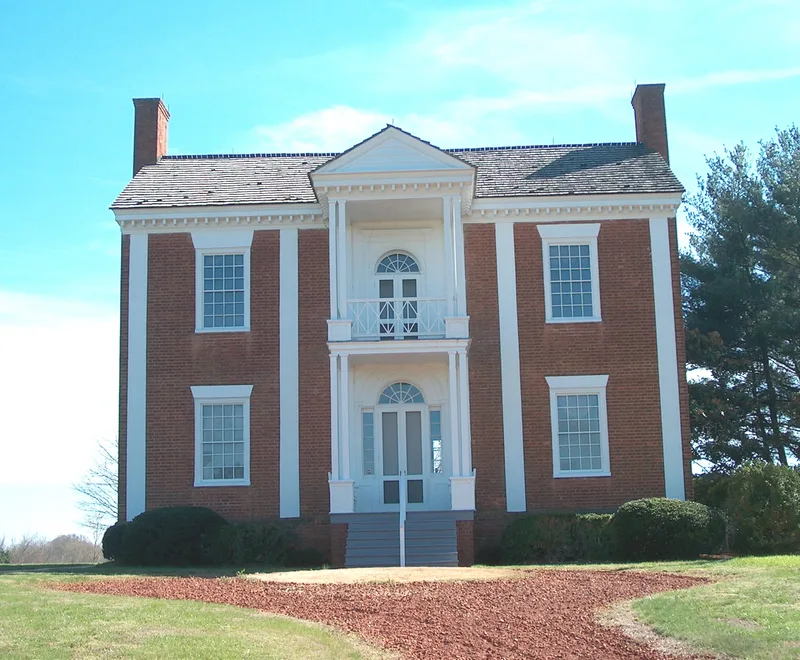
Vann House is a two-story brick plantation residence at Spring Place in Murray County, Georgia, begun about 1803 for James Vann, a wealthy Cherokee businessman whose mother was Cherokee and whose father was a Scot. Moravian missionary craftsmen from nearby Spring Place helped build it, and Vann moved in on March 24, 1805. The bricks were made on the property, and the interior features a carved, cantilevered stairway and a decorated drawing room chimney piece in Federal style with Georgian overtones. Described as the showplace of the Cherokee Nation, the house stood on the Federal Road and hosted visiting chiefs and, in 1819, President Monroe. Joseph Vann inherited it in 1814. Georgia guardsmen forced his family out in 1834 during the Cherokee Removal. The state acquired the deteriorating house in 1952, restored it, and opened it as a museum in 1958.
Significance in brief: The form calls it the showplace of the Cherokee Nation and a mansion of architectural and historical distinction deep in Indian country. It is tied to James Vann, his son Joseph, the Moravian mission at Spring Place, and the 1834 Cherokee Removal. Its Federal style woodwork, with Georgian influences, is also noted.
Machine-generated summary. This summary was generated by a language model from the official nomination document and has not been reviewed line by line by an editor. It may contain errors. Check the source document before relying on any detail. Source: nomination document (PDF) · National Archives catalog entry. NRHP reference 69000044, listed October 28, 1969. Summary generated October 2026 (model claude-sonnet-5-5, prompt v1.0-2026-10-29, confidence medium).
Key facts
| Address | Jct. of U.S. 76 and GA 225, Spring Place |
|---|---|
| County | Murray County |
| Listed | October 28, 1969 |
| Reference number | 69000044 |
| Resource type | Building |
| Period of significance | c. 1803-c. 1805 |
| Architect / builder | Built with Moravian missionary craftsmen from Spring Place and other carpenters, one from North Carolina; restoration architect Dr. Henry Chandlee Forman |
| Architectural style | Federal, with continuing American Georgian tradition |
| Areas of significance | Politics/Government, Architecture, Religion, Social History |
| Level of significance | National |
| Status (as stated in the nomination) | Operated as a furnished historic house museum by the Georgia Historical Commission, opened July 1958; condition listed as good, on its original site and unaltered. |
| Acreage | 3 |
| Coordinates | 34.76397, -84.84300 (NPS GIS) |
What listing means for this property
National Register listing is honorary for a privately owned home: it does not by itself restrict what an owner may do with their own money, and it does not require public access. Restrictions come from local landmark or historic-district ordinances, which are separate (how they differ).
Owner-occupied houses are not eligible for the 20% federal rehabilitation tax credit, which applies to income-producing buildings, but many states offer credits for homeowners. Listing also opens the door to preservation easements and to buying a plaque. Start with what listing means for homeowners, renovating a listed house and selling one.
General information, not legal or tax advice. Rules change; confirm with your State Historic Preservation Office or a qualified adviser.
Sources and further reading
- National Park Service, National Register of Historic Places database (snapshot May 2026), reference 69000044.
- Nomination form (PDF, National Archives) — catalog entry
- Wikipedia article (used for cross-checking only; text not reproduced here)
- Wikidata Q5096950
- This listing as JSON
Last updated October 2026. Found an error? See the editorial policy for how to report it.