Wynne, Thomas, House
Also known as: Old Russell Place

Why it's listed
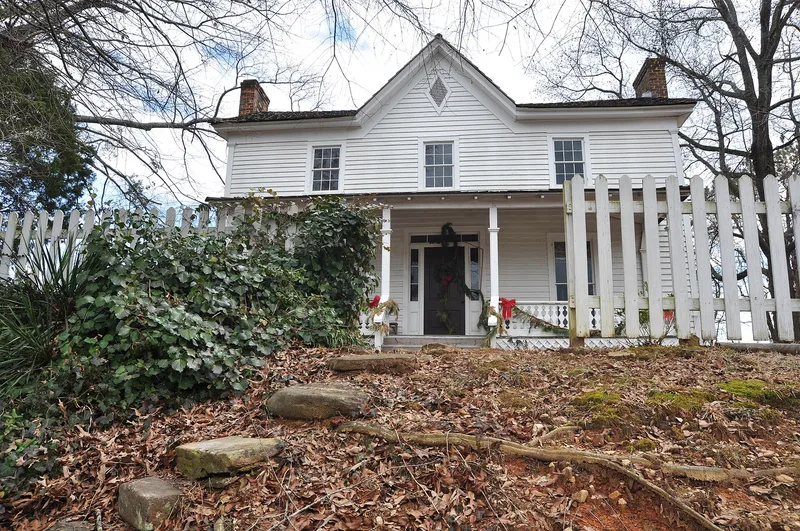
Located between U.S. Highway 29 and old Highway 29 near Lilburn, this two-story frame farmhouse dates from the early 1820s. Oral tradition says Thomas Wynne built it soon after moving his family to Gwinnett County from South Carolina. The house follows the plantation plain form, with two main rooms flanking a central hall, exterior end chimneys and a center front gable. Later owners altered it in stages, around 1848, 1866 and 1878. Greek Revival mantels and moldings were added, and Victorian features followed, including a rear kitchen, porches, boxed cornices and interior partitions. A segmental-arched fireplace upstairs supports the early construction date. The Wynne and Russell families owned the property for generations, and the last family resident died in 1971. The house was recognized as a good example of vernacular architecture that reflects local settlement and changing domestic styles. At the time of listing it was deteriorating and unoccupied, and local groups hoped to restore it for public gatherings.
Significance in brief: The nomination argues the house matters to the local community as part of its early settlement history. It is also a prime example of a plantation plain house altered over time as tastes changed, with Greek Revival and Victorian additions. The evaluated significance is local.
Machine-generated summary. This summary was generated by a language model from the official nomination document and has not been reviewed line by line by an editor. It may contain errors. Check the source document before relying on any detail. Source: nomination document (PDF) · National Archives catalog entry. NRHP reference 77000436, listed July 8, 1977. Summary generated October 2026 (model claude-sonnet-5-5, prompt v1.0-2026-10-29, confidence medium).
Key facts
| Address | N of Lilburn on U.S. 29, Lilburn |
|---|---|
| County | Gwinnett County |
| Listed | July 8, 1977 |
| Reference number | 77000436 |
| Resource type | Building |
| Period of significance | 1800-1899 |
| Architect / builder | Thomas Wynne (by oral tradition) |
| Architectural style | Plantation Plain, with Greek Revival and Victorian additions |
| Areas of significance | Architecture, Social History |
| Level of significance | Local |
| Status (as stated in the nomination) | Described as deteriorating and not in use at the time of nomination; local residents proposed restoring it as a local meeting place. |
| Acreage | 3.7 |
| Coordinates | 33.89927, -84.13791 (NPS GIS) |
What listing means for this property
National Register listing is honorary for a privately owned home: it does not by itself restrict what an owner may do with their own money, and it does not require public access. Restrictions come from local landmark or historic-district ordinances, which are separate (how they differ).
Owner-occupied houses are not eligible for the 20% federal rehabilitation tax credit, which applies to income-producing buildings, but many states offer credits for homeowners. Listing also opens the door to preservation easements and to buying a plaque. Start with what listing means for homeowners, renovating a listed house and selling one.
Noted as vacant in the nomination. Nomination documents can be decades old; current status may differ. If you are considering buying an empty listed property, read the due-diligence checklist.
General information, not legal or tax advice. Rules change; confirm with your State Historic Preservation Office or a qualified adviser.
Sources and further reading
- National Park Service, National Register of Historic Places database (snapshot May 2026), reference 77000436.
- Nomination form (PDF, National Archives) — catalog entry
- Wikidata Q134360269
- This listing as JSON
Last updated October 2026. Found an error? See the editorial policy for how to report it.