Crawford-Dorsey House and Cemetery

Why it's listed
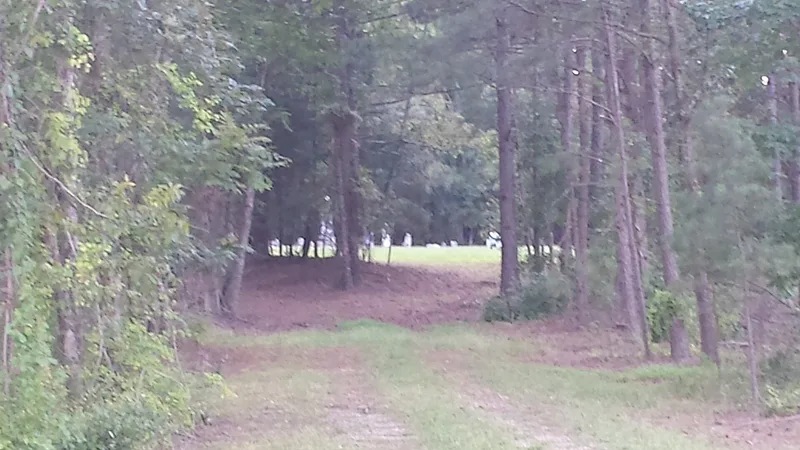
Near Lovejoy in Clayton County, Georgia, this antebellum plantation house is made up of two parts: an 1820s section on the east and a ca. 1850s section on the west with a two-story portico and Greek Revival balustrade details. Both parts are clad in white-painted heart-pine clapboard and have two front rooms without a central hall. The property also includes a well shed and well, a stone-and-brick food storage structure, and a family cemetery where early graves are covered with shells. The house was home to William Crawford, an early settler, and later to Stephen G. Dorsey, who in 1861 was the county's largest slaveowner and served as a Justice of the Inferior Court. On August 20, 1864, a cavalry battle was fought in the fields and woods around the house. Its lack of later modernization preserves early building methods, and the site may hold archaeological evidence of vanished plantation outbuildings.
Significance in brief: The house is an unusual combination of two houses joined into one dwelling, and it keeps early-nineteenth-century materials and techniques largely intact. It was the site of a Civil War cavalry engagement on August 20, 1864. It was also the home of two locally important families, the Crawfords and the Dorseys.
Machine-generated summary. This summary was generated by a language model from the official nomination document and has not been reviewed line by line by an editor. It may contain errors. Check the source document before relying on any detail. Source: nomination document (PDF) · National Archives catalog entry. NRHP reference 84000972, listed July 5, 1984. Summary generated October 2026 (model claude-sonnet-5-5, prompt v1.0-2026-10-29, confidence high).
Key facts
| Address | Freeman and McDonough Rds., Lovejoy |
|---|---|
| County | Clayton County |
| Listed | July 5, 1984 |
| Reference number | 84000972 |
| Resource type | Building |
| Architectural style | Plantation Plain with Greek Revival details |
| Criteria |
|
| Areas of significance | Military, Architecture |
| Level of significance | Local |
| Status (as stated in the nomination) | Listed as unoccupied and vacant. It is owned by the county and leased to a heritage association formed to preserve and restore it. The house has never been wired for electricity or adapted for modern plumbing. |
| Acreage | 14.2 |
| Coordinates | 33.45250, -84.31274 (NPS GIS) |
What listing means for this property
For a publicly owned building or structure, listing mainly matters when federal funds, permits or licences are involved: projects then go through Section 106 review so effects on the property are considered. Listing also strengthens applications for preservation grants and, for leased income-producing uses, can enable the federal rehabilitation tax credit.
Noted as vacant in the nomination. Nomination documents can be decades old; current status may differ. If you are considering buying an empty listed property, read the due-diligence checklist.
General information, not legal or tax advice. Rules change; confirm with your State Historic Preservation Office or a qualified adviser.
Sources and further reading
- National Park Service, National Register of Historic Places database (snapshot May 2026), reference 84000972.
- Nomination form (PDF, National Archives) — catalog entry
- Wikipedia article (used for cross-checking only; text not reproduced here)
- Wikidata Q5182808
- This listing as JSON
Last updated October 2026. Found an error? See the editorial policy for how to report it.