Vernonburg Historic District
Also known as: Vernonburgh; 9ch703

Why it's listed
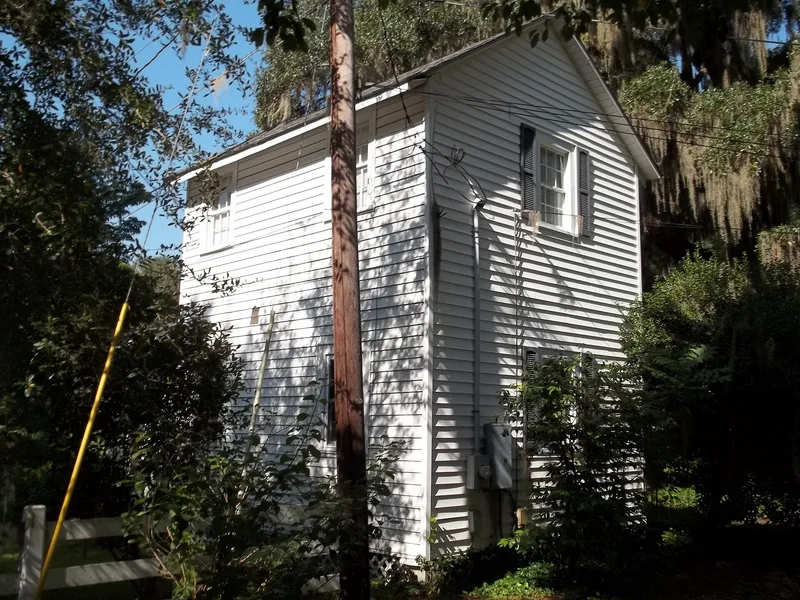
Vernonburg is a small coastal community on White Bluff, a bend of the Vernon River about eight miles south of downtown Savannah. It grew in three phases: a mid-18th-century German colonial settlement, a mid- to late 19th-century resort and railroad suburb, and a 20th-century bedroom suburb. Two narrow, oak-shaded streets, Dancy and Rockwell Avenues, form an L along the bluff. The district counts 41 contributing resources, mostly houses built between the 1840s and 1940s in Greek Revival, Italianate, Colonial Revival and Craftsman styles, plus archaeological sites. Because residents moved to larger sites nearer the river, remains of the original 60 by 90 foot colonial lots were preserved. Shovel tests and excavations in 1990 and 1993 documented that settlement. The district is significant for the architecture of its houses, which reflect ordinary Georgia building practice, and for archaeology that can show how a colonial ethnic village became an Anglo-American resort and suburb.
Significance in brief: The district is argued to be significant for its archaeology, because the 18th-century colonial town site survives largely undisturbed and can show how a colonial ethnic community became a resort and suburban one. It is also significant in architecture (Criterion C) for houses that represent mainstream Georgia residential styles, types and construction methods from the early 19th to the mid-20th century.
Machine-generated summary. This summary was generated by a language model from the official nomination document and has not been reviewed line by line by an editor. It may contain errors. Check the source document before relying on any detail. Source: nomination document (PDF) · National Archives catalog entry. NRHP reference 00000714, listed June 22, 2000. Summary generated October 2026 (model claude-sonnet-5-5, prompt v1.0-2026-10-29, confidence medium).
Key facts
| Address | Dancy Ave., Rockwell Ave. and S. Rockwell Ave., Vernonburg |
|---|---|
| County | Chatham County |
| Listed | June 22, 2000 |
| Reference number | 00000714 |
| Resource type | District |
| Architectural style | Greek Revival, Italianate, Colonial Revival, Classical Revival, Spanish Colonial Revival, Bungalow/Craftsman; house types include hall-parlor, I-house and Georgian |
| Criteria |
|
| Areas of significance | Historic - Non-Aboriginal, Architecture, Community Planning and Development, European, Exploration/Settlement |
| Level of significance | State |
| Status (as stated in the nomination) | Current functions are single dwellings and secondary structures; the area is dominated by residential housing and landscaped yards. |
| Acreage | 285 |
| Coordinates | 31.97229, -81.12599 (NPS GIS) |
What listing means for this property
This is a historic district. Buildings within its boundary are either contributing (they add to the district's significance) or non-contributing. Owners of contributing income-producing buildings can claim the 20% federal rehabilitation tax credit; homeowners should look at state credits. National Register districts impose no design review by themselves; a local historic district ordinance, if one exists, does (the difference explained).
General information, not legal or tax advice. Rules change; confirm with your State Historic Preservation Office or a qualified adviser.
Sources and further reading
- National Park Service, National Register of Historic Places database (snapshot May 2026), reference 00000714.
- Nomination form (PDF, National Archives) — catalog entry
- Wikidata Q141737351
- This listing as JSON
Last updated October 2026. Found an error? See the editorial policy for how to report it.