Woodlawn Historic and Archeological District
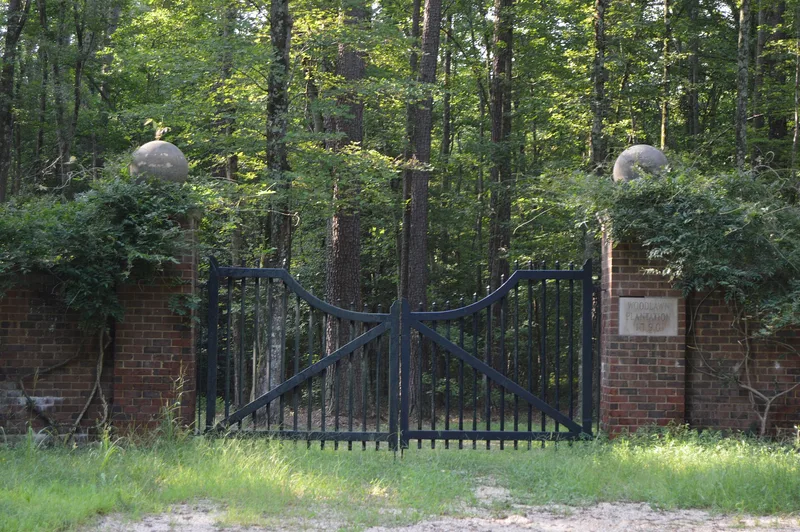

Why it's listed
Woodlawn is an 899-acre plantation on the north bank of the Rappahannock River in King George County, Virginia. Its main house began about 1790 as a small 1 1/2-story dwelling, now the kitchen wing. Around 1841 Richard H. Turner enlarged it into a two-story, five-bay Georgian-form house with a Greek Revival interior and porch. In 1934 a Colonial Revival sunroom wing and a two-story pedimented portico were added, and a 1982 rehabilitation kept that exterior. Nearby are a detached kitchen, a slaves' quarter and a smokehouse from the first half of the nineteenth century, plus a barn and implement shed. The district was recognized for its long-stable boundaries and land uses, its link to the Turner family, and its place in the river-based plantation economy. Its architecture reflects several building periods. Seven archaeological sites, including five Native American sites, add evidence of prehistoric and plantation-era settlement.
Machine-generated summary. This summary was generated by a language model from the official nomination document and has not been reviewed line by line by an editor. It may contain errors. Check the source document before relying on any detail. Source: nomination document (PDF) · catalog entry. Generated October 2026 (model claude-sonnet-5-5, prompt v1.0-2026-10-29).
| Styles | Mixed: Georgian, Greek Revival, Colonial Revival |
|---|---|
| Areas of significance | Prehistoric, Historic - Aboriginal, Historic - Non-Aboriginal, Agriculture, Transportation, Architecture |
| Acreage | 899 |
| Boundary source | NPS cultural-resource GIS polygon |
| Full listing page | Woodlawn Historic and Archeological District (property record) |
What listing means for this property
This is a historic district. Buildings within its boundary are either contributing (they add to the district's significance) or non-contributing. Owners of contributing income-producing buildings can claim the 20% federal rehabilitation tax credit; homeowners should look at state credits. National Register districts impose no design review by themselves; a local historic district ordinance, if one exists, does (the difference explained).
General information, not legal or tax advice. Rules change; confirm with your State Historic Preservation Office or a qualified adviser.