White Post Historic District

Why it's listed
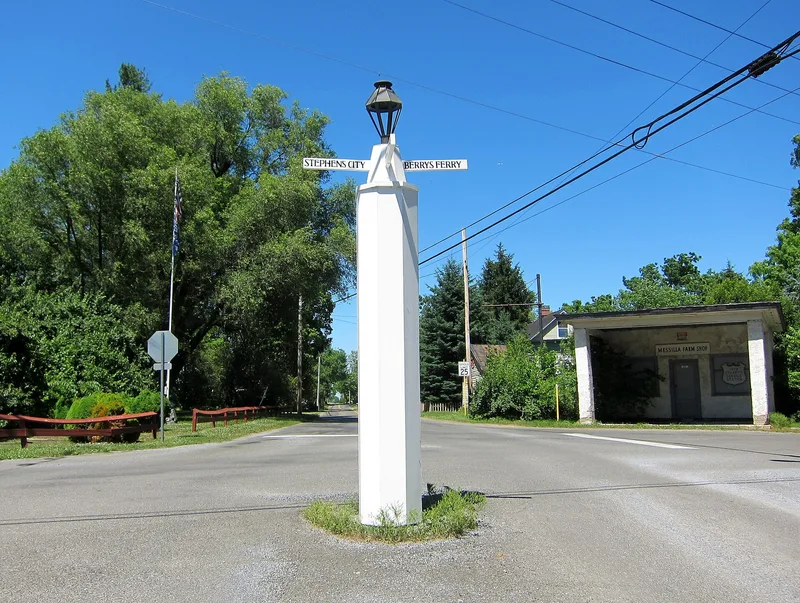
White Post is a small crossroads village in southwestern Clarke County, Virginia, where two roads meet at a white-painted octagonal wood post eleven feet tall. The post gave the town its name and has been replaced several times. The district has twenty-eight buildings, including late 19th-century frame and stucco houses, two churches, a parish hall, a 1913 post office and three abandoned commercial structures. Five modern houses do not contribute to its character. The most prominent building is Bishop Meade Memorial Church, a large brick Gothic Revival church dedicated in 1875, with corbelled cornices and pinnacled pilasters. The village grew around a marker Lord Fairfax set up in the 1760s to direct travelers to Greenway Court. It is also known as the birthplace of Bishop William Meade, a leader of the Episcopal Church's revival in Virginia. A log house of about 1784 is the only surviving 18th-century building. Together the buildings preserve the rural character and small scale of a Valley crossroads town.
Machine-generated summary. This summary was generated by a language model from the official nomination document and has not been reviewed line by line by an editor. It may contain errors. Check the source document before relying on any detail. Source: nomination document (PDF) · catalog entry. Generated October 2026 (model claude-sonnet-5-5, prompt v1.0-2026-10-29).
| Period of significance | Late 18th century; 19th and 20th centuries |
|---|---|
| Styles | Victorian Gothic Revival church, Queen Anne houses, and late 19th-century vernacular frame and stucco residences |
| Areas of significance | Religion, Architecture |
| Acreage | 25 |
| Boundary source | NPS cultural-resource GIS polygon |
| Full listing page | White Post Historic District (property record) |
What listing means for this property
This is a historic district. Buildings within its boundary are either contributing (they add to the district's significance) or non-contributing. Owners of contributing income-producing buildings can claim the 20% federal rehabilitation tax credit; homeowners should look at state credits. National Register districts impose no design review by themselves; a local historic district ordinance, if one exists, does (the difference explained).
General information, not legal or tax advice. Rules change; confirm with your State Historic Preservation Office or a qualified adviser.