Westover Historic District

Why it's listed
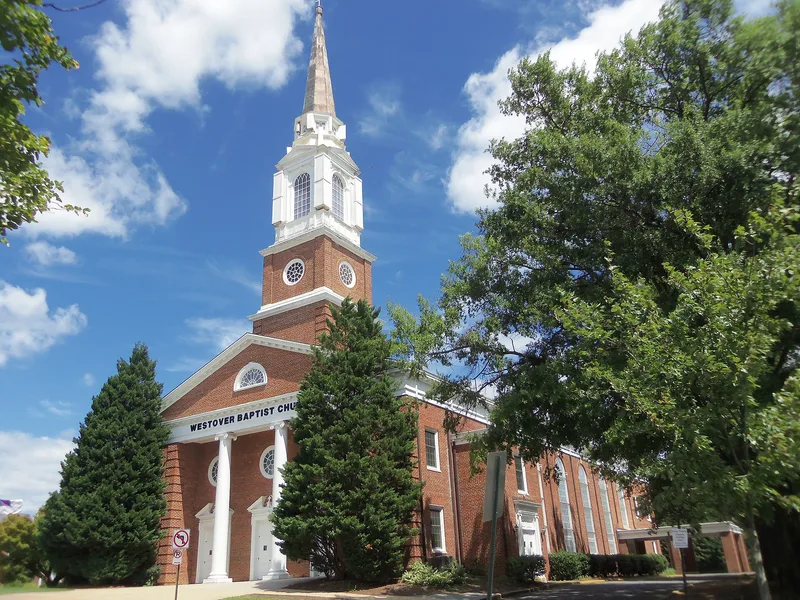
Westover is a planned residential neighborhood in northwestern Arlington County, Virginia, covering about 143 acres and roughly 418 primary buildings. It grew in phases beginning with the Westover Apartments in 1939, followed by Westover Hills, Keene's Addition and Westover Park through the 1940s. Most of the buildings were put up by Mace Properties with mortgages insured by the Federal Housing Administration. The streets are lined with two-story brick Colonial Revival single-family houses, twin houses, duplexes and garden apartments, designed by architects including Adolph Thelander and Harry Ormston. Buildings sit back from winding streets and cul-de-sacs, leaving generous yards, courtyards and open space. A commercial area along Washington Boulevard includes a shopping center, a junior high school and a church, with a park and pedestrian paths nearby. The neighborhood was recognized for its architecture and for its role as an example of mid-twentieth-century suburban community planning, with a period of significance from 1939 to 1948.
Machine-generated summary. This summary was generated by a language model from the official nomination document and has not been reviewed line by line by an editor. It may contain errors. Check the source document before relying on any detail. Source: nomination document (PDF) · catalog entry. Generated October 2026 (model claude-sonnet-5-5, prompt v1.0-2026-10-29).
| Period of significance | 1939-1948 |
|---|---|
| Styles | Late 19th and 20th Century Revivals/Colonial Revival; Modern Movement/Moderne |
| Areas of significance | Architecture, Community Planning and Development |
| Acreage | 173.4 |
| Boundary source | NPS cultural-resource GIS polygon |
| Full listing page | Westover Historic District (property record) |
What listing means for this property
This is a historic district. Buildings within its boundary are either contributing (they add to the district's significance) or non-contributing. Owners of contributing income-producing buildings can claim the 20% federal rehabilitation tax credit; homeowners should look at state credits. National Register districts impose no design review by themselves; a local historic district ordinance, if one exists, does (the difference explained).
General information, not legal or tax advice. Rules change; confirm with your State Historic Preservation Office or a qualified adviser.