West End Historic District (Boundary Increase)

Why it's listed
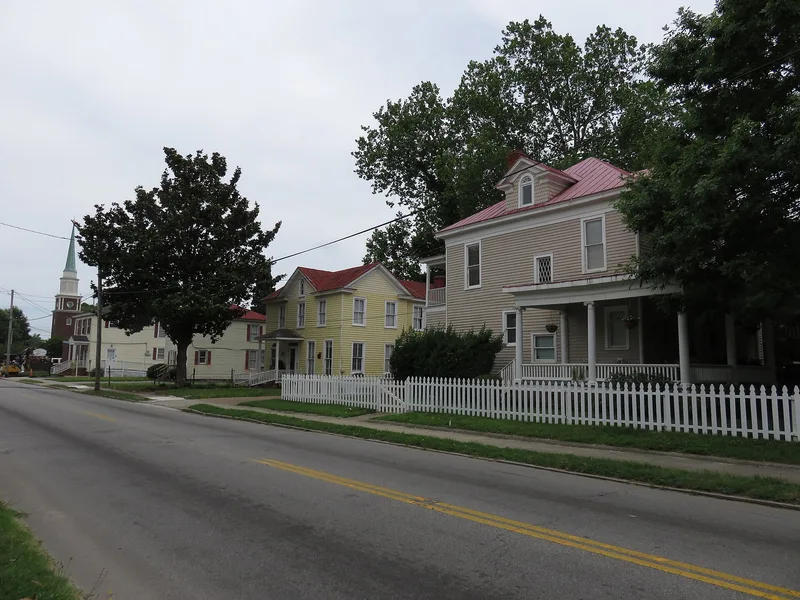
Along the east side of Wellons Street in Suffolk, Virginia, a short row of houses extends the West End neighborhood eastward. The group holds eight contributing buildings and four noncontributing resources, mostly garages, sheds and one 1975 house. Most dwellings date from about 1890 to 1925 and are modest local vernacular types, identified more by roof shape and massing than by formal style. Examples include Foursquare-inspired cube-shaped houses, side-gable houses with restrained Colonial Revival details, and a Folk Victorian cottage with sawn trim. The largest is the Queen Anne style J. C. Causey, Jr. House on West Washington Street, later used as a funeral home. The street was platted by 1898 as part of Suffolk's first true suburb, which grew as railroads and the peanut industry expanded the city's middle class. The area was added because it continues the streetscape, street pattern and building types of the original district, and it retains integrity despite some replacement siding.
Machine-generated summary. This summary was generated by a language model from the official nomination document and has not been reviewed line by line by an editor. It may contain errors. Check the source document before relying on any detail. Source: nomination document (PDF) · catalog entry. Generated October 2026 (model claude-sonnet-5-5, prompt v1.0-2026-10-29).
| Period of significance | circa 1890 - circa 1925 |
|---|---|
| Styles | Late Victorian/Queen Anne; no style (local vernacular forms with Colonial Revival, American Foursquare and Folk Victorian elements) |
| Areas of significance | Architecture, Community Planning and Development |
| Acreage | 2.5 |
| Boundary source | NPS cultural-resource GIS polygon |
| Full listing page | West End Historic District (Boundary Increase) (property record) |
What listing means for this property
This is a historic district. Buildings within its boundary are either contributing (they add to the district's significance) or non-contributing. Owners of contributing income-producing buildings can claim the 20% federal rehabilitation tax credit; homeowners should look at state credits. National Register districts impose no design review by themselves; a local historic district ordinance, if one exists, does (the difference explained).
General information, not legal or tax advice. Rules change; confirm with your State Historic Preservation Office or a qualified adviser.