West Broad Street Industrial and Commercial Historic District

Why it's listed
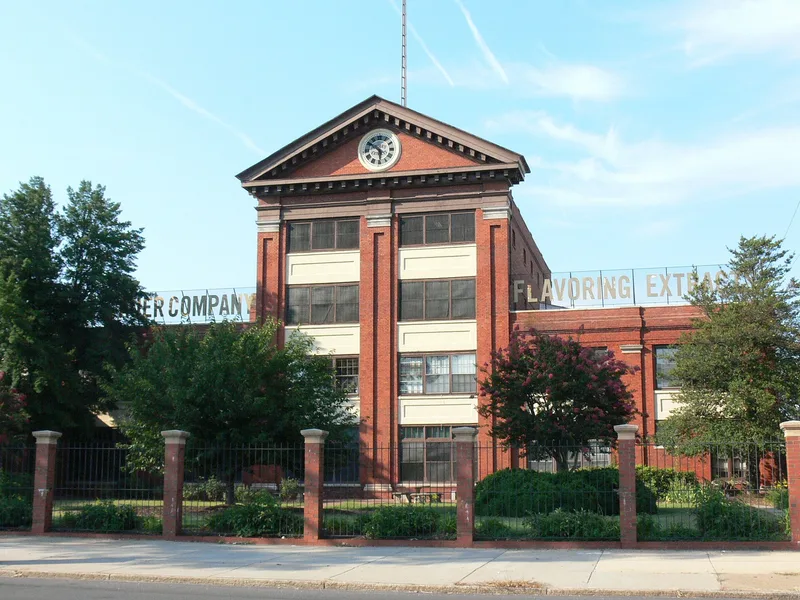
Located in central Richmond, this district covers about 40 acres of factories, warehouses and storefronts along West Broad and West Marshall Streets. Most buildings were put up between 1902 and the 1930s, when Richmond's industrial activity shifted here from Manchester south of the James River to take advantage of rail lines and undeveloped land. Large plants such as the Putney Shoe Factory, the Virginia School Supply Building and the C.F. Sauer headquarters, home to the well-known bulb-lit Sauer's Vanilla sign, were served by rail spurs. As Broad Street became the main east-west artery, auto dealerships such as the Atlantic Motor Company and rows of plate-glass storefronts followed, and a Modern Sears department store arrived around 1946. Architecture is mostly restrained, with simplified Colonial Revival and Art Deco or Moderne touches in durable masonry. Ground-floor storefronts have often been remodeled, yet upper stories and overall massing keep the area's historic commercial and industrial character.
Machine-generated summary. This summary was generated by a language model from the official nomination document and has not been reviewed line by line by an editor. It may contain errors. Check the source document before relying on any detail. Source: nomination document (PDF) · catalog entry. Generated October 2026 (model claude-sonnet-5-5, prompt v1.0-2026-10-29).
| Period of significance | 1902-1960 |
|---|---|
| Styles | Colonial Revival, Commercial, Moderne, International Style |
| Areas of significance | Architecture, Commerce, Industry |
| Acreage | 40 |
| Boundary source | NPS cultural-resource GIS polygon |
| Full listing page | West Broad Street Industrial and Commercial Historic District (property record) |
What listing means for this property
This is a historic district. Buildings within its boundary are either contributing (they add to the district's significance) or non-contributing. Owners of contributing income-producing buildings can claim the 20% federal rehabilitation tax credit; homeowners should look at state credits. National Register districts impose no design review by themselves; a local historic district ordinance, if one exists, does (the difference explained).
General information, not legal or tax advice. Rules change; confirm with your State Historic Preservation Office or a qualified adviser.