Washington Historic District

Why it's listed
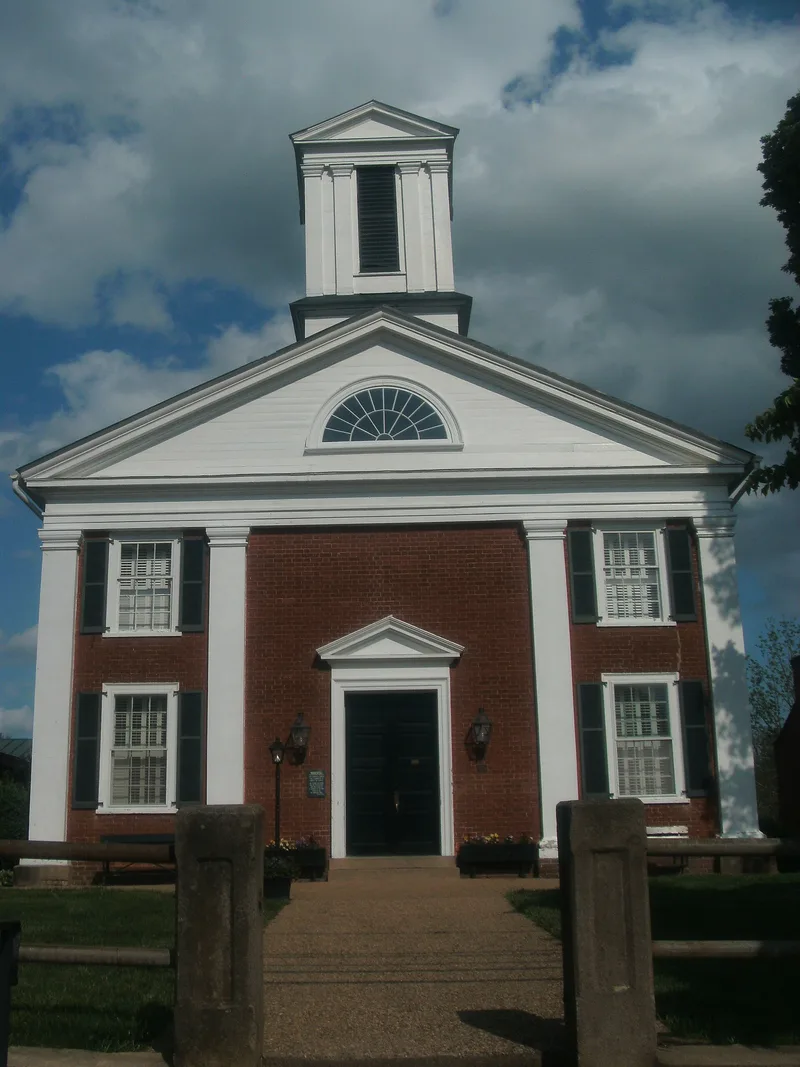
Washington is a small Virginia Piedmont town at the foot of the Blue Ridge Mountains and the seat of Rappahannock County since 1833. Its street grid of two main streets, five cross streets and 51 half-acre lots was surveyed by George Washington in 1749, and the layout largely survives. The courthouse, a Flemish-bond brick building with a wooden belfry, was built in 1833 by James Leake Powers, who also built Trinity Episcopal Church and the former Presbyterian church, now the library. Around the courthouse on Gay Street are a clerk's office, jail, churches, a Masonic hall and a bank. Commercial buildings include the Washington House tavern and stores that keep original shelves and drawers. Larger houses such as The Meadows and The Maples surround the village. About one hundred buildings lie within the town limits. Nearly all of the nineteenth-century public buildings and many early houses remain, which is why the town was listed.
Machine-generated summary. This summary was generated by a language model from the official nomination document and has not been reviewed line by line by an editor. It may contain errors. Check the source document before relying on any detail. Source: nomination document (PDF) · catalog entry. Generated October 2026 (model claude-sonnet-5-5, prompt v1.0-2026-10-29).
| Period of significance | 18th and 19th centuries (the 1975 form checks both; a later inventory lists periods such as 1750-1899 and 1900-45 for individual resources) |
|---|---|
| Styles | Nineteenth-century courthouse town; Jeffersonian courthouse, Gothic Revival, Roman Revival, Federal, Eastlake and Italianate buildings |
| Areas of significance | Community Planning and Development, Politics/Government, Architecture |
| Acreage | 140 |
| Boundary source | NPS cultural-resource GIS polygon |
| Full listing page | Washington Historic District (property record) |
What listing means for this property
This is a historic district. Buildings within its boundary are either contributing (they add to the district's significance) or non-contributing. Owners of contributing income-producing buildings can claim the 20% federal rehabilitation tax credit; homeowners should look at state credits. National Register districts impose no design review by themselves; a local historic district ordinance, if one exists, does (the difference explained).
General information, not legal or tax advice. Rules change; confirm with your State Historic Preservation Office or a qualified adviser.