Washington Avenue Historic District

Why it's listed
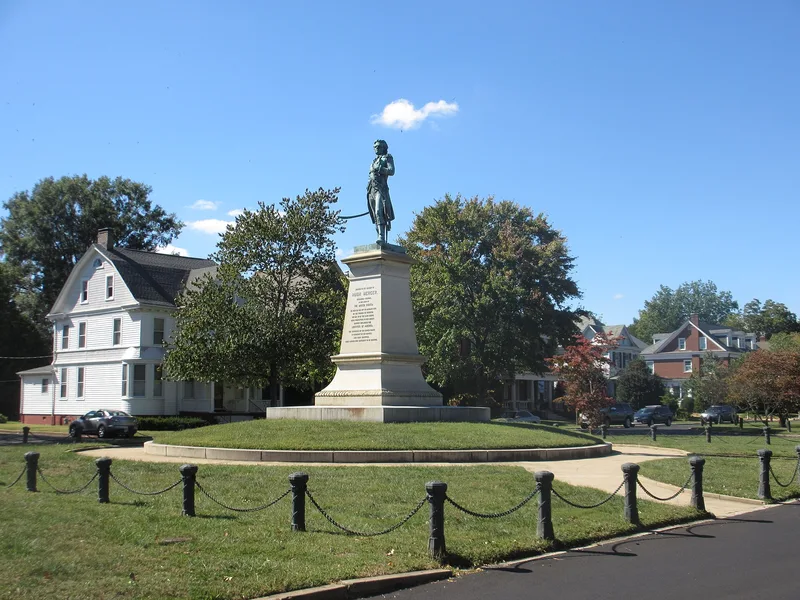
Washington Avenue in Fredericksburg, Virginia, is a four-block-long, 150-foot-wide boulevard with grassy medians and mature trees, lined with substantial houses built around the turn of the 20th century. The district counts 36 contributing houses and other buildings, four monuments and a cemetery site. Its land was once part of the large plantation around Kenmore, the 1770s Georgian mansion built for Fielding Lewis and Betty Washington, which anchors the southern end and is now a museum. The avenue was developed after 1890 by the Fredericksburg Development Company, partly to give a ceremonial approach to Mary Washington's grave and monument. Houses display Italianate, Queen Anne, Shingle, Colonial Revival and Craftsman styles, several designed by architect Philip N. Stern or built by local contractors such as Frank Stearns and E.G. Heflin. Monuments include the Hugh Mercer statue by sculptor Edward V. Valentine. The area keeps most of its early character, with few late-20th-century intrusions.
Machine-generated summary. This summary was generated by a language model from the official nomination document and has not been reviewed line by line by an editor. It may contain errors. Check the source document before relying on any detail. Source: nomination document (PDF) · catalog entry. Generated October 2026 (model claude-sonnet-5-5, prompt v1.0-2026-10-29).
| Styles | Late Victorian (Italianate, Queen Anne, Romanesque, Shingle Style); Colonial Revival, Classical Revival, French Renaissance; Bungalow/Craftsman |
|---|---|
| Areas of significance | Community Planning and Development, Architecture, Social History, Military, Art |
| Acreage | 18 |
| Boundary source | NPS cultural-resource GIS polygon |
| Full listing page | Washington Avenue Historic District (property record) |
What listing means for this property
This is a historic district. Buildings within its boundary are either contributing (they add to the district's significance) or non-contributing. Owners of contributing income-producing buildings can claim the 20% federal rehabilitation tax credit; homeowners should look at state credits. National Register districts impose no design review by themselves; a local historic district ordinance, if one exists, does (the difference explained).
General information, not legal or tax advice. Rules change; confirm with your State Historic Preservation Office or a qualified adviser.