Warrenton Historic District (Additional Documentation)

Why it's listed
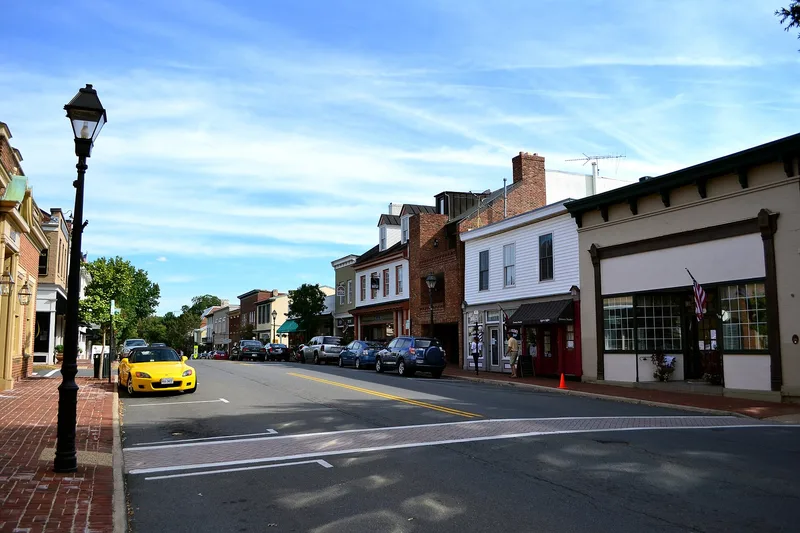
Warrenton is a small courthouse town in central Fauquier County, Virginia, about forty-seven miles south of Washington, D.C. The historic district takes in the Main Street business area, Courthouse Square and five later residential neighborhoods, with 323 buildings in all. It grew from a mid-18th-century crossroads settlement known as Fauquier Court House, the county seat since 1759, and was laid out on a grid in 1811. The focal point is the Classical Revival courthouse of 1890, designed by William H. Baldwin, surrounded by Colonial Revival public buildings of the 1920s. Tree-lined streets such as Culpeper and Winchester hold Federal, Greek Revival and Italianate houses. The district was recognized for its architecture and for its association with law and politics, including early careers of John Marshall, William "Extra Billy" Smith and Samuel Chilton, and for its many Civil War-related structures. A highway bypass has kept the historic center largely intact.
Machine-generated summary. This summary was generated by a language model from the official nomination document and has not been reviewed line by line by an editor. It may contain errors. Check the source document before relying on any detail. Source: nomination document (PDF) · catalog entry. Generated October 2026 (model claude-sonnet-5-5, prompt v1.0-2026-10-29).
| Styles | Mixed: Federal, Greek Revival, Italianate, Colonial Revival, Classical Revival, Queen Anne and vernacular |
|---|---|
| Areas of significance | Commerce, Military, Education, Law, Politics/Government, Architecture, Ethnic Heritage-Black, Social History |
| Acreage | 127 |
| Boundary source | NPS cultural-resource GIS polygon |
| Full listing page | Warrenton Historic District (Additional Documentation) (property record) |
What listing means for this property
This is a historic district. Buildings within its boundary are either contributing (they add to the district's significance) or non-contributing. Owners of contributing income-producing buildings can claim the 20% federal rehabilitation tax credit; homeowners should look at state credits. National Register districts impose no design review by themselves; a local historic district ordinance, if one exists, does (the difference explained).
General information, not legal or tax advice. Rules change; confirm with your State Historic Preservation Office or a qualified adviser.