Warm Springs Mill

The National Park Service has not published a boundary polygon for this district; the map shows the listed properties inside it and the district's reference point.
Why it's listed
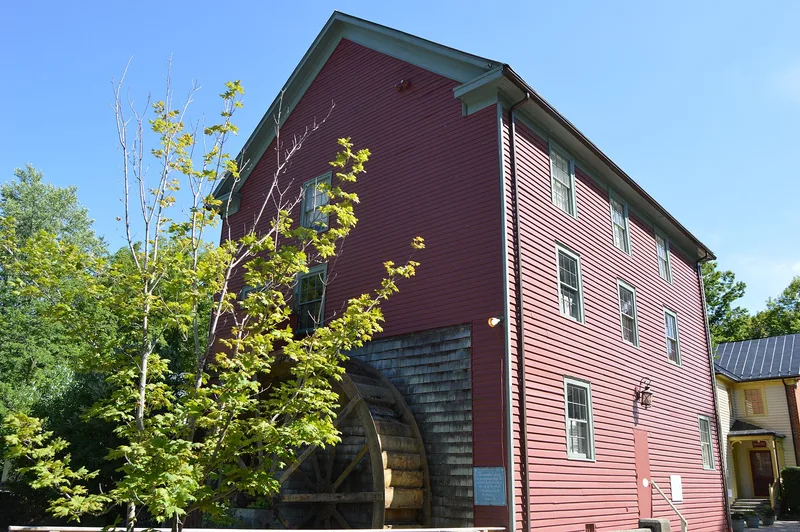
Warm Springs Mill, also called Miller Mill, is a three-story timber-frame gristmill on the south bank of Warm Springs Run in Bath County, Virginia. W. H. Miller built it around 1901 on a site where earlier mills had operated since the 1800s. An iron overshot Fitz water wheel, nearly twenty feet wide, still stands on its north side. Inside, the cellar and first floor keep the face wheel, leather belts, wooden chutes, a millstone in its wooden vat and a system of grain elevators. The mill was listed because it is the only surviving mill building in Bath County. It operated under several owners until closing in 1971, outlasting more than twenty other county mills. Its design follows traditional millwrighting practice dating to Oliver Evans, even though many millers of the period were building roller mills. Today it houses a restaurant, a pub and apartments, with most original fabric intact.
Machine-generated summary. This summary was generated by a language model from the official nomination document and has not been reviewed line by line by an editor. It may contain errors. Check the source document before relying on any detail. Source: nomination document (PDF) · catalog entry. Generated October 2026 (model claude-sonnet-5-5, prompt v1.0-2026-10-29).
| Period of significance | 1901-1971 |
|---|---|
| Areas of significance | Industry |
| Acreage | 0.5 |
| Boundary source | not published |
| Full listing page | Warm Springs Mill (property record) |
What listing means for this property
This is a historic district. Buildings within its boundary are either contributing (they add to the district's significance) or non-contributing. Owners of contributing income-producing buildings can claim the 20% federal rehabilitation tax credit; homeowners should look at state credits. National Register districts impose no design review by themselves; a local historic district ordinance, if one exists, does (the difference explained).
General information, not legal or tax advice. Rules change; confirm with your State Historic Preservation Office or a qualified adviser.