Uptown-Parker-Gray Historic District

Why it's listed
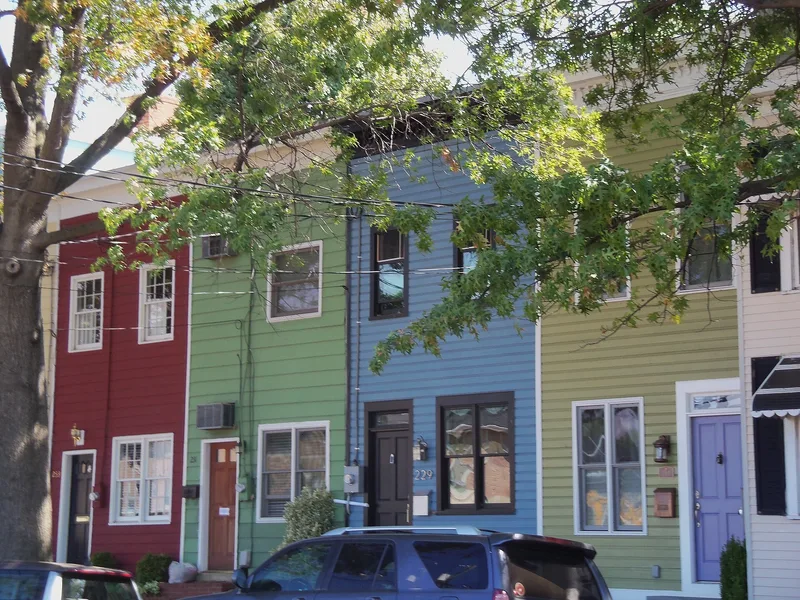
Covering most of the northwestern quadrant of Old Town Alexandria, this district follows a street grid laid out in 1797, though most of the land stayed vacant until the 1860s and nearly all surviving buildings date from after 1870. Small frame and brick row houses and town houses dominate, many with restrained Italianate, Queen Anne, Greek Revival and Colonial Revival details. Brick Colonial Revival rows built by developers fill whole blocks in the west, and more than 200 units of public housing from the 1940s to 1959 stand in the northeast. Warehouses line former railroad routes along North Henry and North Fayette Streets. Queen Street was once the city's main African-American business district, and a segregated school opened in the neighborhood in 1920, helping define it as the Parker-Gray community. Recent infill and restorations blend with older fabric, so the district keeps its architectural coherence. It contains 984 contributing resources.
Machine-generated summary. This summary was generated by a language model from the official nomination document and has not been reviewed line by line by an editor. It may contain errors. Check the source document before relying on any detail. Source: nomination document (PDF) · catalog entry. Generated October 2026 (model claude-sonnet-5-5, prompt v1.0-2026-10-29).
| Styles | Greek Revival, Queen Anne, Italianate, Colonial Revival, Art Deco/Modern |
|---|---|
| Areas of significance | Architecture, Black, Social History |
| Acreage | 201.6 |
| Boundary source | NPS cultural-resource GIS polygon |
| Full listing page | Uptown-Parker-Gray Historic District (property record) |
What listing means for this property
This is a historic district. Buildings within its boundary are either contributing (they add to the district's significance) or non-contributing. Owners of contributing income-producing buildings can claim the 20% federal rehabilitation tax credit; homeowners should look at state credits. National Register districts impose no design review by themselves; a local historic district ordinance, if one exists, does (the difference explained).
General information, not legal or tax advice. Rules change; confirm with your State Historic Preservation Office or a qualified adviser.