Two Hundred Block West Franklin Street Historic District

The National Park Service has not published a boundary polygon for this district; the map shows the listed properties inside it and the district's reference point.
Why it's listed
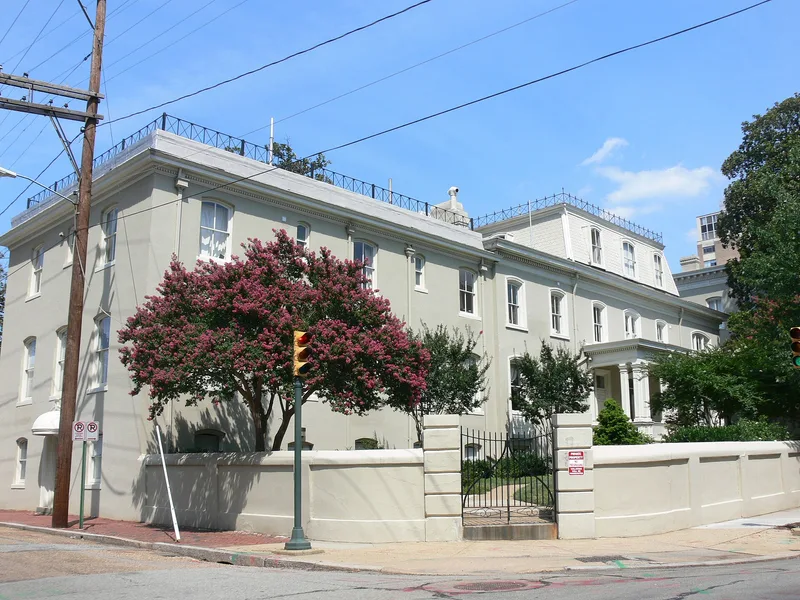
Eight nineteenth-century houses line the 200 block of West Franklin Street in Richmond, in a buffer zone between the downtown business district and the Fan District. Built from the early 1800s to the 1890s, they show a wide run of styles, including Federal, Greek Revival, Italianate, Eastlake and Beaux-Arts. Most follow the side-passage, double-pile town house plan used in urban dwellings for centuries. Notable examples include the mansard-roofed Ida Schoolcraft House with its ornate cast-iron fence, the early Cole Diggs House with Colonial Revival interiors, the Price House, which later served as part of Tucker's Hospital, and the Carter-Mayo House, designed by Carrère and Hastings soon after 1893. The T. Seddon Bruce House, built about 1882-1885, has fine Eastlake woodwork. The block survives intact apart from one demolished corner building and is considered the finest group of buildings left in the area, though new high-rise construction nearby threatens its setting.
Machine-generated summary. This summary was generated by a language model from the official nomination document and has not been reviewed line by line by an editor. It may contain errors. Check the source document before relying on any detail. Source: nomination document (PDF) · catalog entry. Generated October 2026 (model claude-sonnet-5-5, prompt v1.0-2026-10-29).
| Styles | Federal, Greek Revival, Italianate, Queen Anne-Eastlake, Colonial Revival and Beaux-Arts |
|---|---|
| Areas of significance | Architecture, Social History |
| Acreage | 3 |
| Boundary source | not published |
| Full listing page | Two Hundred Block West Franklin Street Historic District (property record) |
What listing means for this property
This is a historic district. Buildings within its boundary are either contributing (they add to the district's significance) or non-contributing. Owners of contributing income-producing buildings can claim the 20% federal rehabilitation tax credit; homeowners should look at state credits. National Register districts impose no design review by themselves; a local historic district ordinance, if one exists, does (the difference explained).
General information, not legal or tax advice. Rules change; confirm with your State Historic Preservation Office or a qualified adviser.