Twin Lakes State Park

Why it's listed
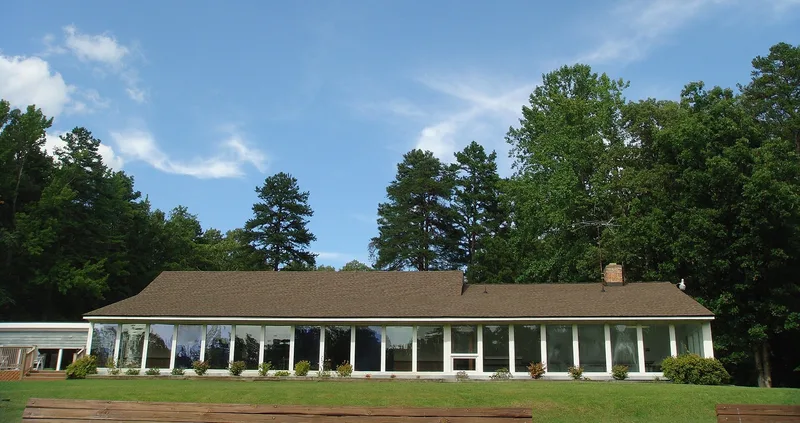
Twin Lakes State Park lies about three miles north of State Route 460 in Prince Edward County, Virginia, inside Prince Edward State Forest. It combines two earlier parks: Goodwin Lake Recreational Area, established in 1939, and Prince Edward State Park for Negroes, established in 1949. Each is organized around a manmade lake, 15-acre Goodwin Lake and 36-acre Prince Edward Lake. The district includes cabins, picnic shelters, a conference center, ranger housing, maintenance buildings, dams, spillways and a system of roads and trails. Among the older buildings are a ca. 1936 picnic shelter of hewn cedar logs and concrete block cabins built in 1949-1950. The park was one of four recreational development areas created by the Virginia Division of Forestry with CCC and WPA help during the Depression. Although it was not held to the strict standards of the National Park Service state parks, its entrance roads, lake-centered layout, separated use areas and natural-material buildings show their influence. These qualities, and its role in state park history, support its listing as a historic district.
Machine-generated summary. This summary was generated by a language model from the official nomination document and has not been reviewed line by line by an editor. It may contain errors. Check the source document before relying on any detail. Source: nomination document (PDF) · catalog entry. Generated October 2026 (model claude-sonnet-5-5, prompt v1.0-2026-10-29).
| Styles | Rustic; Post-Modern |
|---|---|
| Areas of significance | Architecture, Black, Entertainment/Recreation, Landscape Architecture |
| Acreage | 469 |
| Boundary source | NPS cultural-resource GIS polygon |
| Full listing page | Twin Lakes State Park (property record) |
What listing means for this property
This is a historic district. Buildings within its boundary are either contributing (they add to the district's significance) or non-contributing. Owners of contributing income-producing buildings can claim the 20% federal rehabilitation tax credit; homeowners should look at state credits. National Register districts impose no design review by themselves; a local historic district ordinance, if one exists, does (the difference explained).
General information, not legal or tax advice. Rules change; confirm with your State Historic Preservation Office or a qualified adviser.