Tredegar Iron Works

Why it's listed
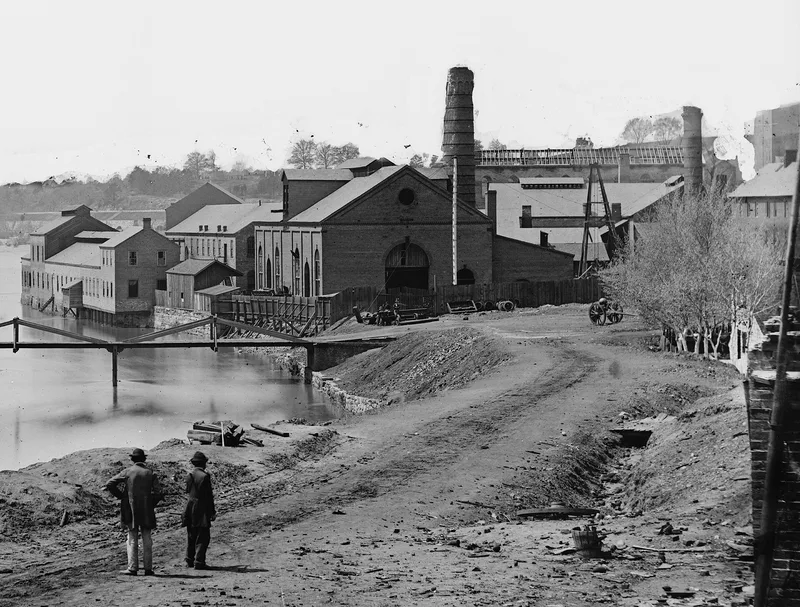
Tredegar Iron Works occupies about 22 acres in downtown Richmond, between the James River and the James River and Kanawha Canal. Founded in 1837 and named by its designer and builder Reev Davis, it grew under Joseph R. Anderson, who took charge in 1841 and expanded it into the third largest iron works in the country by 1861. During the Civil War it cast much of the Confederacy's heavy ordnance, built machinery for other arsenals, and rolled plates for the ironclad Virginia. Experiments with early submarines, torpedoes and machine guns were also carried out there. Four red brick buildings survive: the Office Building, the restored New Gun Foundry, the Spike Factory and the Company Store, along with ruins of the old gun foundry, locomotive shop and rolling mill. Later structures include a World War I shell foundry. After a 1952 fire the company moved in 1957, and the site became a research and storage facility.
Machine-generated summary. This summary was generated by a language model from the official nomination document and has not been reviewed line by line by an editor. It may contain errors. Check the source document before relying on any detail. Source: nomination document (PDF) · catalog entry. Generated October 2026 (model claude-sonnet-5-5, prompt v1.0-2026-10-29).
| Period of significance | 1841-65 |
|---|---|
| Areas of significance | Industry, Military |
| Acreage | 22 |
| Boundary source | NPS cultural-resource GIS polygon |
| Full listing page | Tredegar Iron Works (property record) |
What listing means for this property
This is a historic district. Buildings within its boundary are either contributing (they add to the district's significance) or non-contributing. Owners of contributing income-producing buildings can claim the 20% federal rehabilitation tax credit; homeowners should look at state credits. National Register districts impose no design review by themselves; a local historic district ordinance, if one exists, does (the difference explained).
General information, not legal or tax advice. Rules change; confirm with your State Historic Preservation Office or a qualified adviser.