Town of Halifax Court House Historic District

Why it's listed
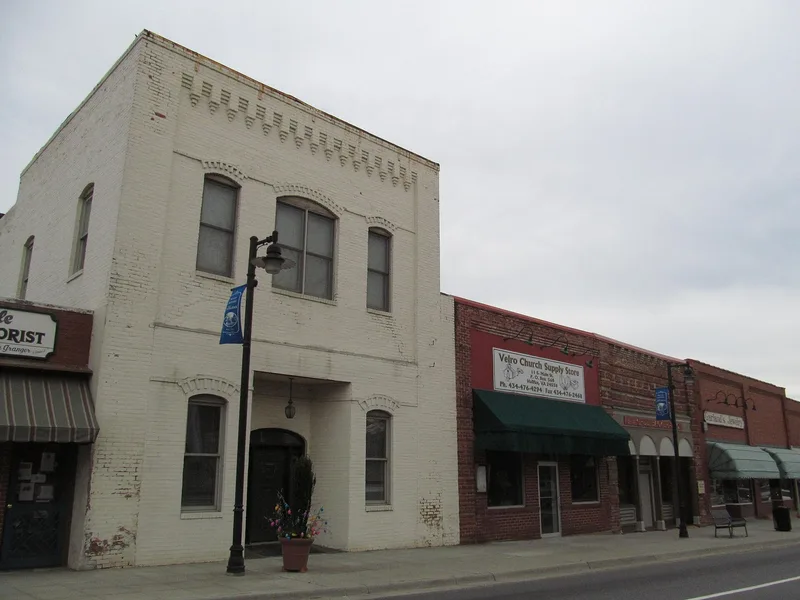
Halifax's historic district follows Main Street through the center of the Halifax County seat in Southside Virginia. At its heart stands the Greek Revival courthouse, built in 1839 by the brick masons Dabney Cosby and his son, with a monumental Ionic portico. Around the courthouse square are small brick lawyers' offices, while one- and two-story brick storefronts line South Main Street, many rebuilt after a late 19th-century fire. Churches, a high school complex, a swimming pool from the 1930s, and mills and a planing mill near the railway tracks reflect the town's growth after the Lynchburg and Durham Railway arrived in the 1880s. Houses range from log and frame dwellings of the early 1800s to Queen Anne, Craftsman and Colonial Revival homes. North Main Street became a center of the African-American community, with two churches and a store. The district covers 1812 to 1958 and includes 187 contributing resources, recognized for architecture, commerce, government, industry, education and ethnic heritage.
Machine-generated summary. This summary was generated by a language model from the official nomination document and has not been reviewed line by line by an editor. It may contain errors. Check the source document before relying on any detail. Source: nomination document (PDF) · catalog entry. Generated October 2026 (model claude-sonnet-5-5, prompt v1.0-2026-10-29).
| Period of significance | 1812-1958 |
|---|---|
| Styles | Queen Anne; Italianate; Greek Revival; Colonial Revival; Craftsman; Commercial Style; Art Deco; Vernacular |
| Areas of significance | Architecture, Commerce, Politics/Government, Industry, Education, Black |
| Acreage | 129 |
| Boundary source | NPS cultural-resource GIS polygon |
| Full listing page | Town of Halifax Court House Historic District (property record) |
What listing means for this property
This is a historic district. Buildings within its boundary are either contributing (they add to the district's significance) or non-contributing. Owners of contributing income-producing buildings can claim the 20% federal rehabilitation tax credit; homeowners should look at state credits. National Register districts impose no design review by themselves; a local historic district ordinance, if one exists, does (the difference explained).
General information, not legal or tax advice. Rules change; confirm with your State Historic Preservation Office or a qualified adviser.