Tazewell Avenue Historic District

Why it's listed
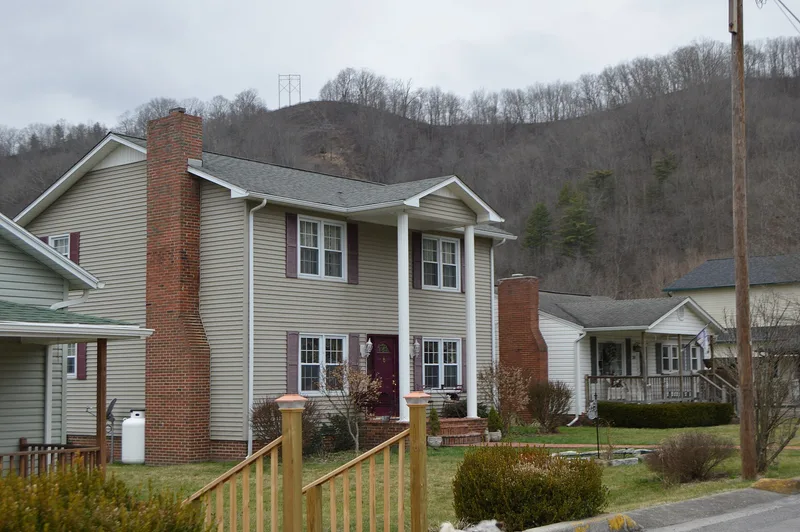
Tazewell Avenue Historic District covers roughly ten blocks on the western side of downtown Richlands, Virginia, across the Clinch River from the main commercial area. It holds about 70 contributing buildings, mostly modest brick or frame houses from c. 1900 to 1960, including Queen Anne cottages, Craftsman bungalows, Cape Cods, Minimal Traditional houses, and Ranch houses. A row of two-story brick Commercial-style buildings lines Front Street, mostly from the 1930s to 1950s, with flat roofs, parapets, and corbelled cornices. The 1941 First Baptist Church adds modest Classical Revival styling, and a small former Pentecostal Holiness sanctuary stands nearby. The area grew as Richlands became a trading center after the town's founding by the Clinch Valley Coal and Iron Company and the arrival of the railroad. Brick manufacturing, coal mining, and commerce supported steady building through the 1950s. The district is recognized for its architecture, commerce, and community development.
Machine-generated summary. This summary was generated by a language model from the official nomination document and has not been reviewed line by line by an editor. It may contain errors. Check the source document before relying on any detail. Source: nomination document (PDF) · catalog entry. Generated October 2026 (model claude-sonnet-5-5, prompt v1.0-2026-10-29).
| Period of significance | circa 1900 - 1960 |
|---|---|
| Styles | Late Victorian: Queen Anne; Minimal Traditional; Colonial Revival; Ranch; Bungalow/Craftsman; Commercial Style |
| Areas of significance | Architecture, Commerce, Community Planning and Development |
| Acreage | 15 |
| Boundary source | NPS cultural-resource GIS polygon |
| Full listing page | Tazewell Avenue Historic District (property record) |
What listing means for this property
This is a historic district. Buildings within its boundary are either contributing (they add to the district's significance) or non-contributing. Owners of contributing income-producing buildings can claim the 20% federal rehabilitation tax credit; homeowners should look at state credits. National Register districts impose no design review by themselves; a local historic district ordinance, if one exists, does (the difference explained).
General information, not legal or tax advice. Rules change; confirm with your State Historic Preservation Office or a qualified adviser.