Taylorstown Historic District

Why it's listed
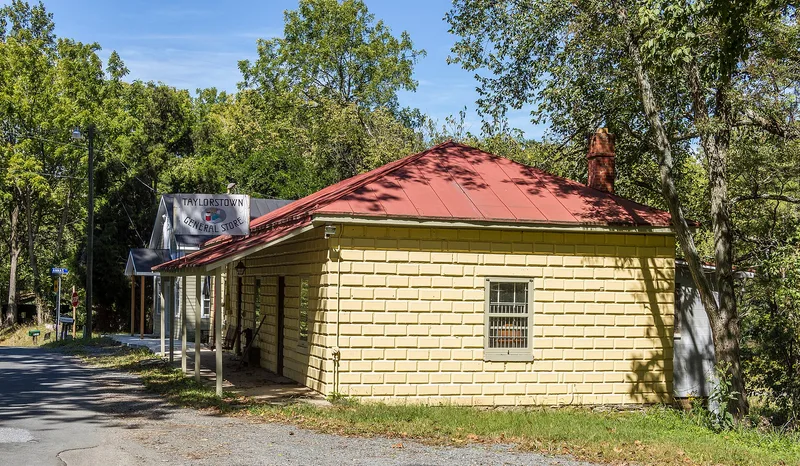
Taylorstown is a tiny mill village beside Catoctin Creek in northern Loudoun County, Virginia, set among farmland at the foot of Catoctin Mountain. The 61-acre district includes a late eighteenth-century fieldstone mill, now a residence, and Hunting Hill, a stone house traditionally dated to 1737 that follows a German plan despite its Quaker setting. Other buildings include the stone cottage Foxton, a ca. 1800 frame store later used as a theatre and garage, Mann's Store of 1904 with concrete walls scored to imitate ashlar, and two ca. 1900 Victorian houses with sawn porch trim. The settlement grew after Thomas Taylor bought the mill in 1784 and sold off small lots nearby. The mill last operated in 1958. The district was recognised because the village keeps an unusually intact historic character, with few modern intrusions, varied vernacular architecture, and well-kept yards set in open pastoral scenery.
Machine-generated summary. This summary was generated by a language model from the official nomination document and has not been reviewed line by line by an editor. It may contain errors. Check the source document before relying on any detail. Source: nomination document (PDF) · catalog entry. Generated October 2026 (model claude-sonnet-5-5, prompt v1.0-2026-10-29).
| Period of significance | 1800-1899 |
|---|---|
| Styles | Vernacular, including a German-plan stone house, a stone mill, early concrete construction and late-Victorian vernacular houses |
| Areas of significance | Commerce, Architecture |
| Acreage | 61 |
| Boundary source | NPS cultural-resource GIS polygon |
| Full listing page | Taylorstown Historic District (property record) |
What listing means for this property
This is a historic district. Buildings within its boundary are either contributing (they add to the district's significance) or non-contributing. Owners of contributing income-producing buildings can claim the 20% federal rehabilitation tax credit; homeowners should look at state credits. National Register districts impose no design review by themselves; a local historic district ordinance, if one exists, does (the difference explained).
General information, not legal or tax advice. Rules change; confirm with your State Historic Preservation Office or a qualified adviser.