Tauxemont Historic District

Why it's listed
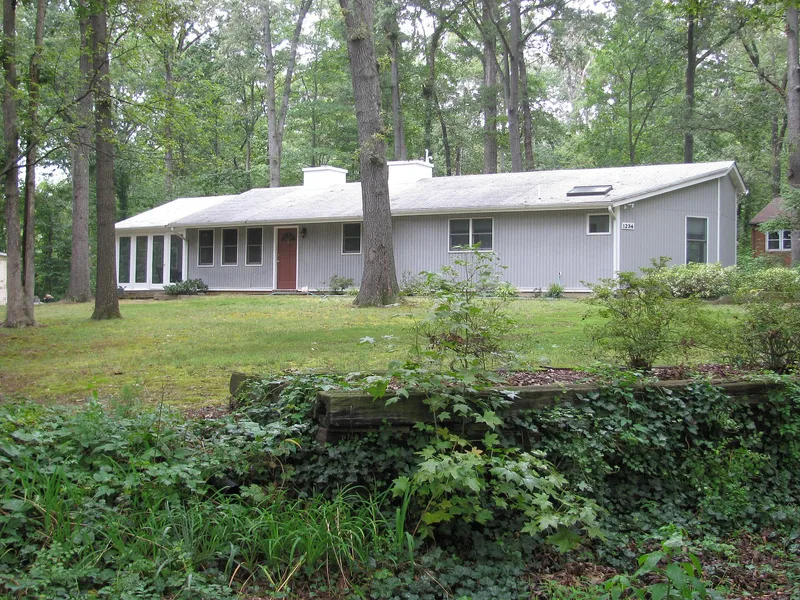
Tauxemont is a wooded residential community about three miles south of Alexandria, Virginia, started in 1941 by a group of government employees building affordable homes together. Its roughly 100 original houses were built in three sections. Most are one-story concrete block houses with low-pitched gable roofs, designed by architect Alexander Knowlton and later extended by developer Robert Davenport. Houses were angled on their lots to preserve trees and hillside contours, and the neighborhood never added sidewalks, curbs or streetlights. Shared facilities include community wells, a preschool and community building, tennis courts and a ball field. Ten houses in the third section are prefabricated aluminum, a postwar attempt to convert wartime factories to housing. In the late 1940s several owners hired architect Charles Goodman to design glass-filled additions, which anticipated the Hollin Hills development. The district was listed for its community planning and Modern Movement architecture between 1941 and 1955.
Machine-generated summary. This summary was generated by a language model from the official nomination document and has not been reviewed line by line by an editor. It may contain errors. Check the source document before relying on any detail. Source: nomination document (PDF) · catalog entry. Generated October 2026 (model claude-sonnet-5-5, prompt v1.0-2026-10-29).
| Period of significance | 1941-1955 |
|---|---|
| Styles | Modern Movement |
| Areas of significance | Architecture, Community Planning and Development |
| Acreage | 50 |
| Boundary source | NPS cultural-resource GIS polygon |
| Full listing page | Tauxemont Historic District (property record) |
What listing means for this property
This is a historic district. Buildings within its boundary are either contributing (they add to the district's significance) or non-contributing. Owners of contributing income-producing buildings can claim the 20% federal rehabilitation tax credit; homeowners should look at state credits. National Register districts impose no design review by themselves; a local historic district ordinance, if one exists, does (the difference explained).
General information, not legal or tax advice. Rules change; confirm with your State Historic Preservation Office or a qualified adviser.