Tappahannock Historic District

Why it's listed
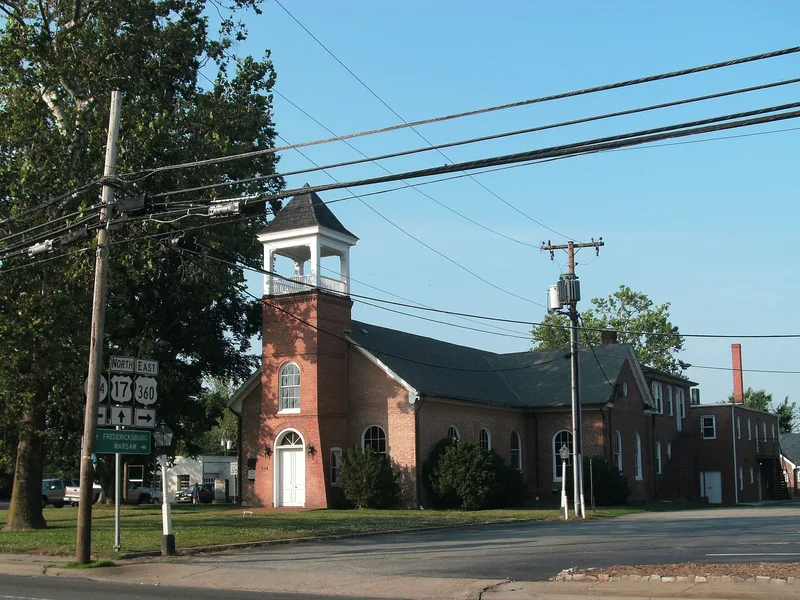
Tappahannock Historic District covers roughly 25 acres along the Rappahannock River in Essex County, Virginia. It follows Prince, Duke and Water Streets and includes the county government center, a small commercial stretch, residences and the grounds of St. Margaret's School. Buildings range from the early eighteenth century to the mid-nineteenth century, among them the Ritchie House, the Custom's House, Scot's Arms Tavern, the Debtor's Prison, the Old Clerk's Office and the 1848 Greek Revival courthouse. The 1728 courthouse survives as Beale Memorial Baptist Church. The town grew from a village patented in 1645 and chartered in 1682, and became the Essex County seat in 1692. In the nineteenth century it was home to Spencer Roane, Thomas Ritchie and John Brockenbrough, cousins who helped the Republican party hold national influence. The district was recognized for these political and maritime links and for its low-scale architecture.
Machine-generated summary. This summary was generated by a language model from the official nomination document and has not been reviewed line by line by an editor. It may contain errors. Check the source document before relying on any detail. Source: nomination document (PDF) · catalog entry. Generated October 2026 (model claude-sonnet-5-5, prompt v1.0-2026-10-29).
| Styles | Georgian, Greek Revival, Gothic Revival and Colonial Revival buildings |
|---|---|
| Areas of significance | Politics/Government, Architecture |
| Acreage | 25 |
| Boundary source | NPS cultural-resource GIS polygon |
| Full listing page | Tappahannock Historic District (property record) |
What listing means for this property
This is a historic district. Buildings within its boundary are either contributing (they add to the district's significance) or non-contributing. Owners of contributing income-producing buildings can claim the 20% federal rehabilitation tax credit; homeowners should look at state credits. National Register districts impose no design review by themselves; a local historic district ordinance, if one exists, does (the difference explained).
General information, not legal or tax advice. Rules change; confirm with your State Historic Preservation Office or a qualified adviser.