St. Paul Historic District

Why it's listed
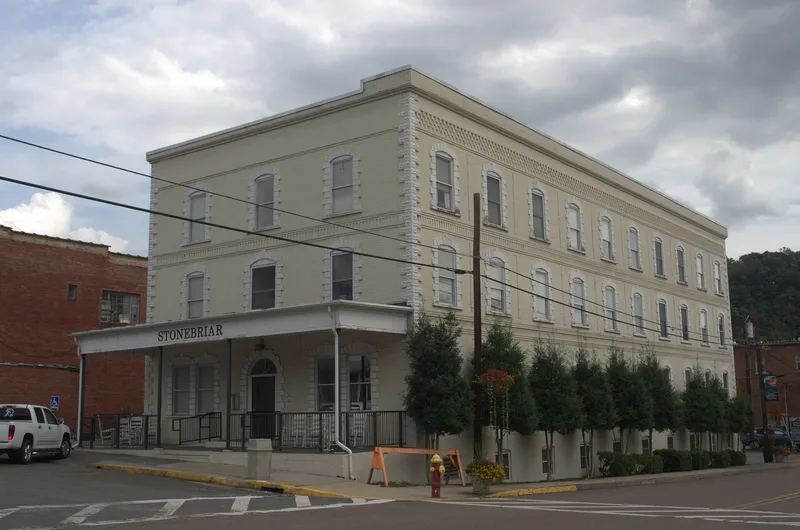
St. Paul's historic district covers the downtown business core of a small railroad town in the southeastern corner of Wise County, Virginia. Set in a cove ringed by steep hills, the district is bounded on the south by the railroad corridor that prompted the town's founding. Visitors enter on Fourth Avenue beneath a concrete railway bridge embossed with the names of earlier railways. Most of the 32 primary resources are two- and three-story commercial buildings from the 1920s to 1950s, set close to the street on narrow lots. Anchors include the former National Bank of St. Paul, with its rusticated stone foundation and elaborate brickwork, and the 1900s Classical Revival hotel, now senior apartments. Two theaters, the Gaiety and the Lyric, recall the town's mid-century liveliness. A few vernacular dwellings from the 1890s survive among the shops. The district is significant for preserving this railroad-era commercial townscape, with a period of significance of 1887 to 1960.
Machine-generated summary. This summary was generated by a language model from the official nomination document and has not been reviewed line by line by an editor. It may contain errors. Check the source document before relying on any detail. Source: nomination document (PDF) · catalog entry. Generated October 2026 (model claude-sonnet-5-5, prompt v1.0-2026-10-29).
| Period of significance | 1887-1960 |
|---|---|
| Styles | Commercial Style, Classical Revival, Art Deco, Beaux Arts |
| Areas of significance | Commerce, Architecture, Transportation |
| Acreage | 10.9 |
| Boundary source | NPS cultural-resource GIS polygon |
| Full listing page | St. Paul Historic District (property record) |
What listing means for this property
This is a historic district. Buildings within its boundary are either contributing (they add to the district's significance) or non-contributing. Owners of contributing income-producing buildings can claim the 20% federal rehabilitation tax credit; homeowners should look at state credits. National Register districts impose no design review by themselves; a local historic district ordinance, if one exists, does (the difference explained).
General information, not legal or tax advice. Rules change; confirm with your State Historic Preservation Office or a qualified adviser.