St. Catherine's School

Why it's listed
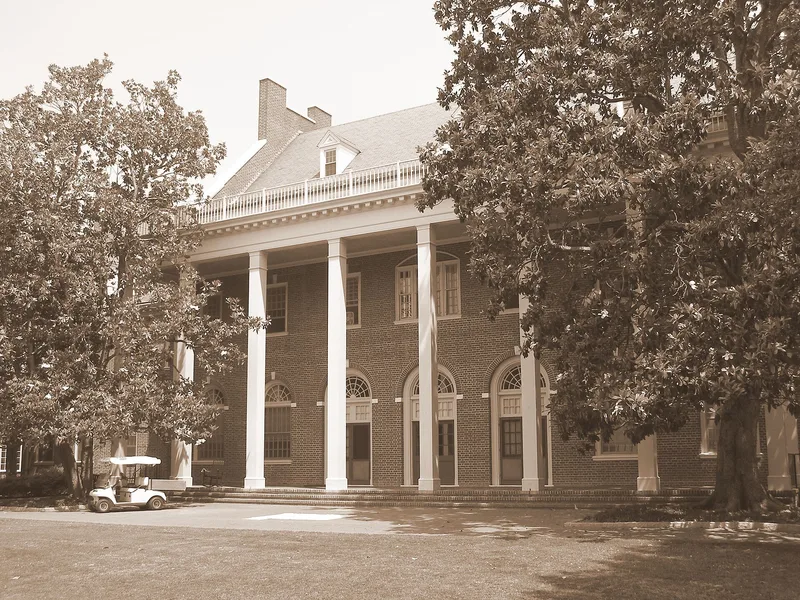
St. Catherine's School occupies a 15-acre campus in Richmond's Westhampton neighborhood, where it educates girls from kindergarten through twelfth grade. The school began in 1890 as the Virginia Randolph Ellett School for Girls and moved to this site in 1917. After joining the Episcopal Church Schools of the Diocese of Virginia in 1920, it commissioned New York architect Hobart Upjohn to prepare a long-term plan, completed in 1921. Upjohn's plan set the Georgian Revival character of the campus: red Flemish bond brick, slate roofs, symmetrical massing and parapeted end walls, arranged in a horseshoe around a tree-lined Green. Richmond landscape architect Charles Gillette added planting plans from 1937 and designed the brick and wrought iron entry gates in 1952. The district is recognized for its role in girls' education, for Ellett's influence as founder, and for its cohesive architecture, with a period of significance running from 1917 to 1953. Later buildings echo the original design.
Machine-generated summary. This summary was generated by a language model from the official nomination document and has not been reviewed line by line by an editor. It may contain errors. Check the source document before relying on any detail. Source: nomination document (PDF) · catalog entry. Generated October 2026 (model claude-sonnet-5-5, prompt v1.0-2026-10-29).
| Period of significance | 1917-1953 |
|---|---|
| Styles | Colonial Revival, Georgian Revival |
| Areas of significance | Architecture, Education, Social History |
| Acreage | 14.9 |
| Boundary source | NPS cultural-resource GIS polygon |
| Full listing page | St. Catherine's School (property record) |
What listing means for this property
This is a historic district. Buildings within its boundary are either contributing (they add to the district's significance) or non-contributing. Owners of contributing income-producing buildings can claim the 20% federal rehabilitation tax credit; homeowners should look at state credits. National Register districts impose no design review by themselves; a local historic district ordinance, if one exists, does (the difference explained).
General information, not legal or tax advice. Rules change; confirm with your State Historic Preservation Office or a qualified adviser.