Spotsylvania Court House Historic District

Why it's listed
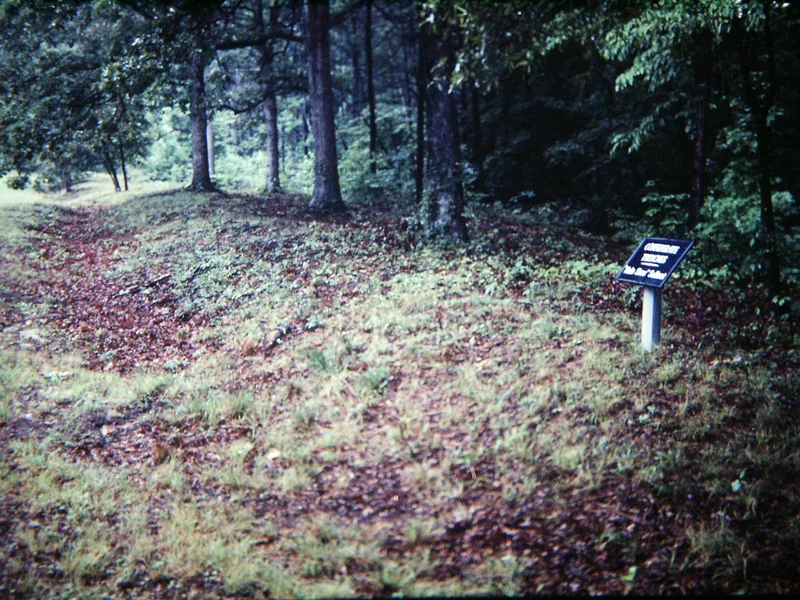
Spotsylvania Court House is a small crossroads county seat about ten miles southwest of Fredericksburg, laid out along Route 208, once the main road between Richmond and Fredericksburg. At its center is the brick courthouse, completed in 1840 by Malcolm B. Crawford with a Tuscan-order portico and heavily repaired in 1900-1901 after Civil War damage. Nearby are a late 18th-century jail moved to the square in 1839, the ca. 1800 Spotswood Inn, Christ Church of 1841, Berea Church of 1856, and the ca. 1840 Dabney farmhouse, the only house to survive the fighting. In May 1864 the village was the scene of intense combat between Lee's and Grant's armies, and the land east of town held a main Confederate defense line, now partly a landscaped Confederate cemetery. After the war the town recovered slowly, and a building boom between 1895 and 1905 produced several substantial frame houses. Open farmland on the east preserves the rural setting.
Machine-generated summary. This summary was generated by a language model from the official nomination document and has not been reviewed line by line by an editor. It may contain errors. Check the source document before relying on any detail. Source: nomination document (PDF) · catalog entry. Generated October 2026 (model claude-sonnet-5-5, prompt v1.0-2026-10-29).
| Styles | Roman Revival courthouse, with Federal, Gothic Revival, Queen Anne, Victorian, builder vernacular and Georgian Revival buildings |
|---|---|
| Areas of significance | Military, Architecture |
| Acreage | 101 |
| Boundary source | NPS cultural-resource GIS polygon |
| Full listing page | Spotsylvania Court House Historic District (property record) |
What listing means for this property
This is a historic district. Buildings within its boundary are either contributing (they add to the district's significance) or non-contributing. Owners of contributing income-producing buildings can claim the 20% federal rehabilitation tax credit; homeowners should look at state credits. National Register districts impose no design review by themselves; a local historic district ordinance, if one exists, does (the difference explained).
General information, not legal or tax advice. Rules change; confirm with your State Historic Preservation Office or a qualified adviser.