Speed the Plough

Why it's listed
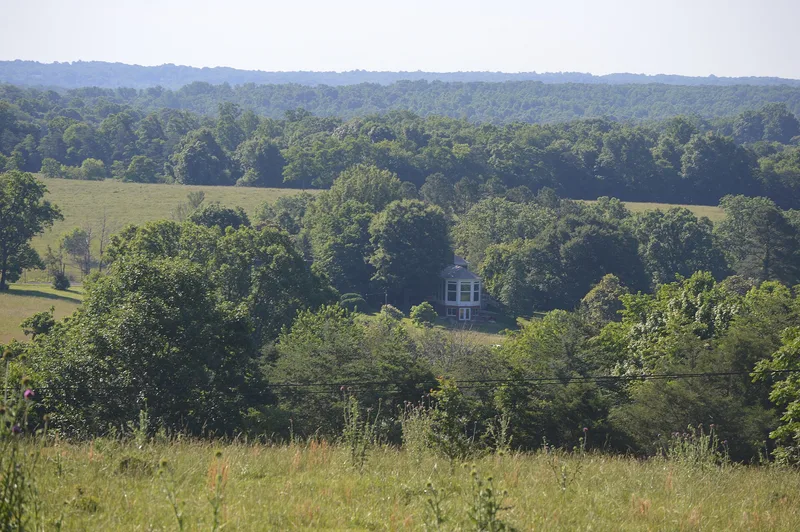
Speed the Plough is a nearly 300-acre farm in Amherst County, Virginia, whose centerpiece is a two-story brick house built around 1850 by William Alexander Dearing in the Greek Revival style. Dearing grew tobacco and grain and held fourteen enslaved people in 1860. After his death in a feud, his family kept the land until 1915, when a fruit company planted orchards. Rowland Lea bought the farm in 1927, remodeled the house, and added bathrooms and a north wing. Around 1933 his partner George C. Stevens financed a barn, a rock wall, a garage and apartment, a chicken house, and the Rock Cottage, a fieldstone Tudor Revival retreat modeled on an English hunting lodge. The grounds also include a springhouse, the Dearing family cemetery, an adjoining African-American cemetery, ponds, and possible archaeological sites. Together these resources trace the farm's shift from tobacco to orchards to pasture across more than two centuries.
Machine-generated summary. This summary was generated by a language model from the official nomination document and has not been reviewed line by line by an editor. It may contain errors. Check the source document before relying on any detail. Source: nomination document (PDF) · catalog entry. Generated October 2026 (model claude-sonnet-5-5, prompt v1.0-2026-10-29).
| Styles | Greek Revival (main house); Tudor Revival (additional structures) |
|---|---|
| Areas of significance | Architecture |
| Acreage | 294 |
| Boundary source | NPS cultural-resource GIS polygon |
| Full listing page | Speed the Plough (property record) |
What listing means for this property
This is a historic district. Buildings within its boundary are either contributing (they add to the district's significance) or non-contributing. Owners of contributing income-producing buildings can claim the 20% federal rehabilitation tax credit; homeowners should look at state credits. National Register districts impose no design review by themselves; a local historic district ordinance, if one exists, does (the difference explained).
General information, not legal or tax advice. Rules change; confirm with your State Historic Preservation Office or a qualified adviser.