South Market Street Historic District

Why it's listed
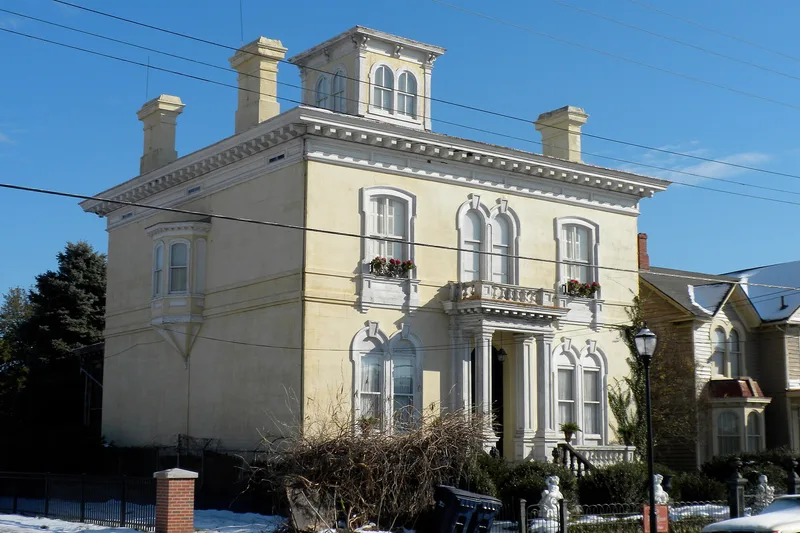
South Market Street in Petersburg, Virginia, holds a two-block remnant of what was once the city's premier residential address. Seventeen resources, mostly brick or frame houses with a few surviving carriage houses and kitchens, line the street from Washington to Halifax Street. Most were built between 1840 and 1905 and show Greek Revival, Italianate, Second Empire, Queen Anne and Colonial Revival styles. The street was home to the McIlwaines, McGills, Williamses, Roper family and other manufacturing and commercial leaders, and was called the "Fifth Avenue of Petersburg." The one non-residential building is the 1858 Gothic Revival church, designed by R. A. Machen, now Mt. Olivet Baptist Church. A cast-iron fence, granite curbs and consistent setbacks add to the setting. On April 3, 1865, the Wallace House hosted a meeting between General Grant and President Lincoln. Despite the loss of several grand houses, the street keeps a cohesive nineteenth-century character.
Machine-generated summary. This summary was generated by a language model from the official nomination document and has not been reviewed line by line by an editor. It may contain errors. Check the source document before relying on any detail. Source: nomination document (PDF) · catalog entry. Generated October 2026 (model claude-sonnet-5-5, prompt v1.0-2026-10-29).
| Period of significance | 1840-1905 |
|---|---|
| Styles | Greek Revival, Gothic Revival, Italianate, Second Empire, Queen Anne, Colonial Revival |
| Areas of significance | Military, Politics/Government, Architecture |
| Acreage | 6.5 |
| Boundary source | NPS cultural-resource GIS polygon |
| Full listing page | South Market Street Historic District (property record) |
What listing means for this property
This is a historic district. Buildings within its boundary are either contributing (they add to the district's significance) or non-contributing. Owners of contributing income-producing buildings can claim the 20% federal rehabilitation tax credit; homeowners should look at state credits. National Register districts impose no design review by themselves; a local historic district ordinance, if one exists, does (the difference explained).
General information, not legal or tax advice. Rules change; confirm with your State Historic Preservation Office or a qualified adviser.