South Boston Historic District Boundary Increase

Why it's listed
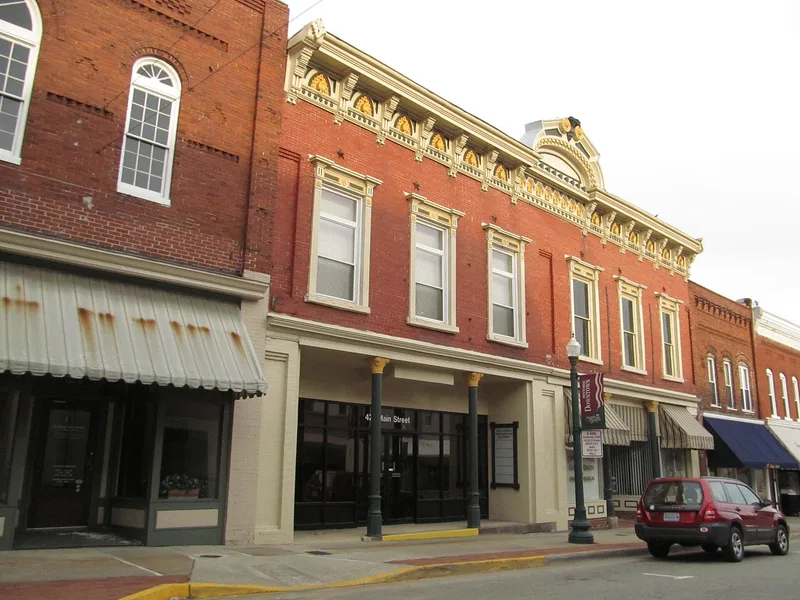
South Boston's historic district was first listed in 1986 and has now been resurveyed and enlarged. The update adds neighborhoods east, north and west of downtown and counts 162 contributing buildings in the resurveyed and added areas. Marshall Avenue is anchored by the three-story, brick Colonial Revival C.H. Friend School of 1939 and lined with houses from about 1890 to the 1950s, including Foursquares, bungalows and Colonial Revival homes. The 1900-2400 blocks of North Main Street and the streets around the 1890 Mizpah Presbyterian Church are traditional African American neighborhoods. North Main Street drew teachers, doctors and other rising middle-class residents, while the Ragland Street area housed tobacco warehouse and prizery workers. A ca. 1930 brick tobacco warehouse on Jefferson Avenue reflects the town's tobacco economy. The period of significance now runs to the late 1950s, when tobacco gave way to textile and other manufacturing.
Machine-generated summary. This summary was generated by a language model from the official nomination document and has not been reviewed line by line by an editor. It may contain errors. Check the source document before relying on any detail. Source: nomination document (PDF) · catalog entry. Generated October 2026 (model claude-sonnet-5-5, prompt v1.0-2026-10-29).
| Period of significance | ca. 1800 through 1958 (original period ca. 1800-1936, expanded to buildings constructed up to 1958) |
|---|---|
| Styles | Late Victorian/Queen Anne; Late 19th and 20th Century Revivals/Colonial Revival; Bungalow/Craftsman |
| Areas of significance | Architecture, Industry, Black |
| Acreage | 39.5 |
| Boundary source | NPS cultural-resource GIS polygon |
| Full listing page | South Boston Historic District Boundary Increase (property record) |
What listing means for this property
This is a historic district. Buildings within its boundary are either contributing (they add to the district's significance) or non-contributing. Owners of contributing income-producing buildings can claim the 20% federal rehabilitation tax credit; homeowners should look at state credits. National Register districts impose no design review by themselves; a local historic district ordinance, if one exists, does (the difference explained).
General information, not legal or tax advice. Rules change; confirm with your State Historic Preservation Office or a qualified adviser.