Seashore State Park Historic District

Why it's listed
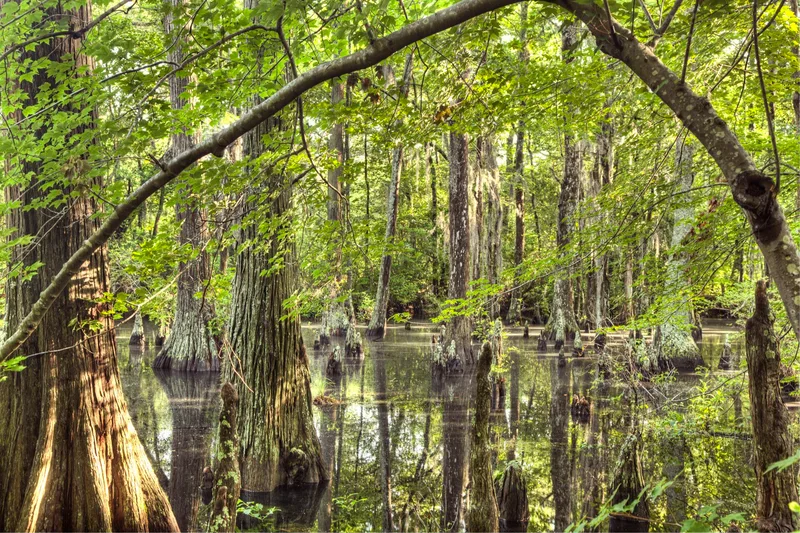
Seashore State Park occupies 2,889 acres on the Chesapeake Bay at Cape Henry in Virginia Beach. Planned in 1929 as a seaside companion to Shenandoah National Park, it was developed in the 1930s by the Civilian Conservation Corps with guidance from the National Park Service and the Virginia Commission on Conservation and Development. The park is split by State Road 60. North of the road are campgrounds, a beach, and the half-timbered Big "H" Complex, built in 1933-1934 as a restaurant and bath house. South of the road lie swampland with cypress and live oak, nine trails following old logging roads, a picnic area, maintenance and staff areas, and a group of board-and-batten cabins with brick chimneys and screened porches. The district was recognized for its link to the Civilian Conservation Corps and Virginia's state park system, and for a park plan that kept roads, camping, and cabins fitted to the natural terrain. Later campgrounds and cabins are counted as noncontributing.
Machine-generated summary. This summary was generated by a language model from the official nomination document and has not been reviewed line by line by an editor. It may contain errors. Check the source document before relying on any detail. Source: nomination document (PDF) · catalog entry. Generated October 2026 (model claude-sonnet-5-5, prompt v1.0-2026-10-29).
| Period of significance | 1933-1942 |
|---|---|
| Styles | Late 19th and Early 20th Century American Movements; Modern Movement |
| Areas of significance | Architecture, Entertainment/Recreation, Landscape Architecture |
| Acreage | 2889 |
| Boundary source | NPS cultural-resource GIS polygon |
| Full listing page | Seashore State Park Historic District (property record) |
What listing means for this property
This is a historic district. Buildings within its boundary are either contributing (they add to the district's significance) or non-contributing. Owners of contributing income-producing buildings can claim the 20% federal rehabilitation tax credit; homeowners should look at state credits. National Register districts impose no design review by themselves; a local historic district ordinance, if one exists, does (the difference explained).
General information, not legal or tax advice. Rules change; confirm with your State Historic Preservation Office or a qualified adviser.