Schuyler Historic District

Why it's listed
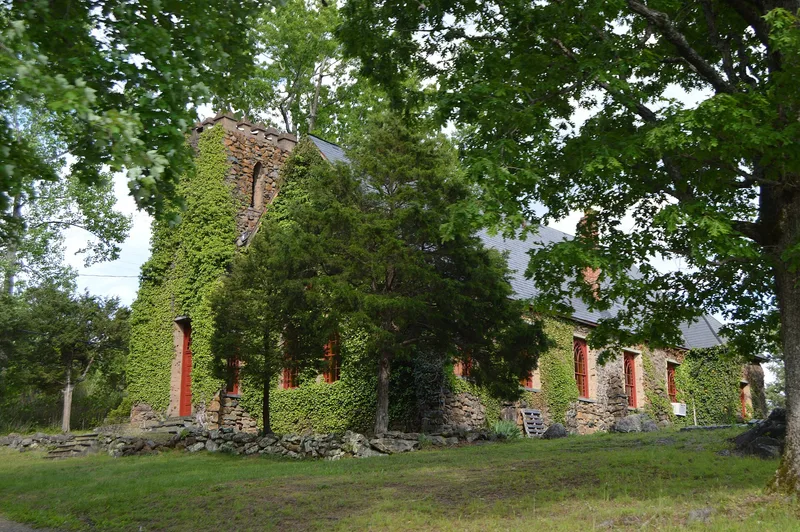
Schuyler is a former company village on the Rockfish River in eastern Nelson County, Virginia. Settled in the 1840s around a saw and grist mill, it grew rapidly after a soapstone quarrying company was established in 1892 and merged with the Alberene Soapstone Company in 1904. The village reached its industrial and population peak in the 1920s. The district covers 563.9 acres and includes 262 contributing resources: workers' houses grouped in neighborhoods such as Church Hill, Stumptown and Gold Mine, along with schools, churches, a hospital, stores, quarries, power plants and dams. The manager's house sits on a bluff above the plant, while workers' dwellings stand on small lots near the roads. Most buildings are modest vernacular designs, with a few fashionable styles among company officials' homes. Scrap soapstone appears in foundations and chimneys throughout. The district was listed for its association with the soapstone industry and community development, and for its architecture.
Machine-generated summary. This summary was generated by a language model from the official nomination document and has not been reviewed line by line by an editor. It may contain errors. Check the source document before relying on any detail. Source: nomination document (PDF) · catalog entry. Generated October 2026 (model claude-sonnet-5-5, prompt v1.0-2026-10-29).
| Period of significance | ca. 1840-1955 |
|---|---|
| Styles | Mostly vernacular and no style, with some Queen Anne, Colonial Revival, Neoclassical Revival, Italianate, Bungalow/Craftsman, Commercial Style and Industrial examples |
| Areas of significance | Architecture, Community Planning and Development, Engineering, Industry, Social History, Transportation, Prehistoric |
| Acreage | 563.9 |
| Boundary source | NPS cultural-resource GIS polygon |
| Full listing page | Schuyler Historic District (property record) |
What listing means for this property
This is a historic district. Buildings within its boundary are either contributing (they add to the district's significance) or non-contributing. Owners of contributing income-producing buildings can claim the 20% federal rehabilitation tax credit; homeowners should look at state credits. National Register districts impose no design review by themselves; a local historic district ordinance, if one exists, does (the difference explained).
General information, not legal or tax advice. Rules change; confirm with your State Historic Preservation Office or a qualified adviser.