Salem Avenue-Roanoke Automotive Commercial Historic District (Boundary Increase)

Why it's listed
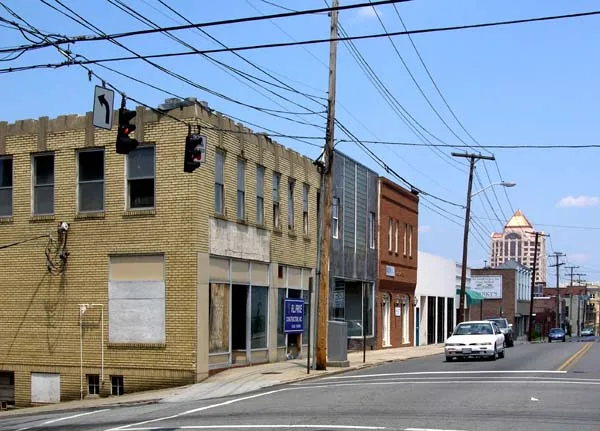
This boundary increase adds eleven buildings to a historic district in southwest Roanoke, Virginia. They sit on the north side of the 500 and 600 blocks of Campbell Avenue and the 700 block of Patterson Avenue, next to the existing district. The group includes two older frame houses from about 1890 and 1900, a ca. 1920 brick duplex, an Art Deco former Buick dealership from about 1930, and several service stations, dealerships and light industrial buildings from the 1940s and 1950s. Several of the houses gained small commercial additions around 1950 to 1955. The area began as a residential neighborhood in the 1880s and by 1919 held small retail businesses, light industrial firms and warehouses. After the 1920s, automobile dealers and service businesses became prominent. At least five of the added buildings were first used for automobile-related business. Though generally plain in design, the buildings illustrate Roanoke's commercial and industrial growth, and all date from the district's period of significance, 1909 to 1958.
Machine-generated summary. This summary was generated by a language model from the official nomination document and has not been reviewed line by line by an editor. It may contain errors. Check the source document before relying on any detail. Source: nomination document (PDF) · catalog entry. Generated October 2026 (model claude-sonnet-5-5, prompt v1.0-2026-10-29).
| Period of significance | ca.1909-1958 |
|---|---|
| Styles | Commercial Style; No Style |
| Areas of significance | Commerce, Industry, Community Planning and Development |
| Acreage | 4.2 |
| Boundary source | NPS cultural-resource GIS polygon |
| Full listing page | Salem Avenue-Roanoke Automotive Commercial Historic District (Boundary Increase) (property record) |
What listing means for this property
This is a historic district. Buildings within its boundary are either contributing (they add to the district's significance) or non-contributing. Owners of contributing income-producing buildings can claim the 20% federal rehabilitation tax credit; homeowners should look at state credits. National Register districts impose no design review by themselves; a local historic district ordinance, if one exists, does (the difference explained).
General information, not legal or tax advice. Rules change; confirm with your State Historic Preservation Office or a qualified adviser.