Salem Avenue-Roanoke Automotive Commercial Historic District

Why it's listed
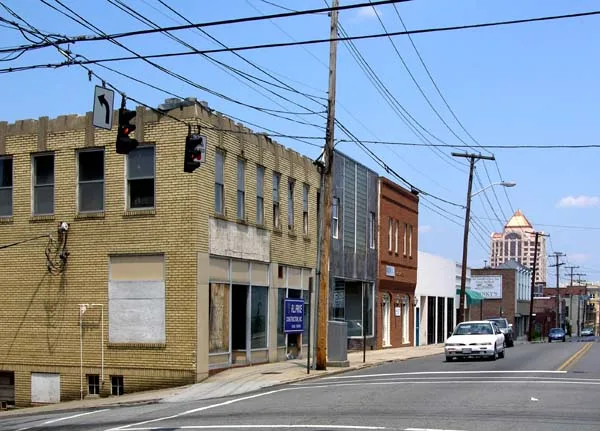
This district occupies about seven blocks in southwest Roanoke, Virginia, along Salem, Rorer and Campbell avenues and parts of 4th, 5th and 6th Streets. It contains fifty-one buildings plus one ancillary building, with 47 counted as contributing. Most are small one- or two-story brick or concrete block structures with flat roofs, parapets, corbelled cornices and decorative brickwork. Many have garage bays, and some keep historic wooden garage doors. The buildings housed auto dealerships, repair garages, parts suppliers, machine shops, warehouses and a bakery, along with two apartment buildings and Fire Department No. 3, built in 1909 in the Neoclassical Revival style. Larger industrial buildings include a four-story corn and feed mill from about 1915 and the Sunlight Bakery of about 1928. Together they show how the automobile and many small industrial firms contributed to Roanoke's growth, supported by its railroad connections and role as a wholesaling and warehousing center.
Machine-generated summary. This summary was generated by a language model from the official nomination document and has not been reviewed line by line by an editor. It may contain errors. Check the source document before relying on any detail. Source: nomination document (PDF) · catalog entry. Generated October 2026 (model claude-sonnet-5-5, prompt v1.0-2026-10-29).
| Styles | Commercial Style, Art Deco, Neoclassical Revival, No Style |
|---|---|
| Areas of significance | Commerce, Industry, Community Planning and Development |
| Acreage | 20 |
| Boundary source | NPS cultural-resource GIS polygon |
| Full listing page | Salem Avenue-Roanoke Automotive Commercial Historic District (property record) |
What listing means for this property
This is a historic district. Buildings within its boundary are either contributing (they add to the district's significance) or non-contributing. Owners of contributing income-producing buildings can claim the 20% federal rehabilitation tax credit; homeowners should look at state credits. National Register districts impose no design review by themselves; a local historic district ordinance, if one exists, does (the difference explained).
General information, not legal or tax advice. Rules change; confirm with your State Historic Preservation Office or a qualified adviser.