Saint Mary's Catholic Cemetery

Why it's listed
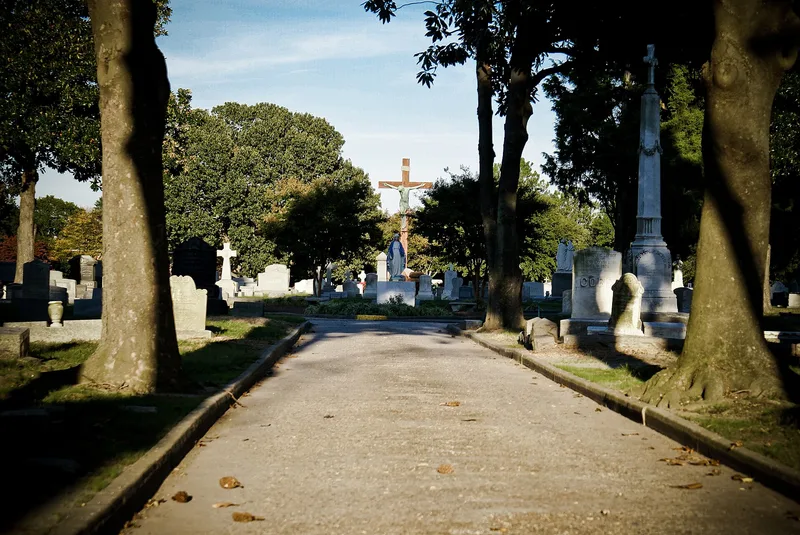
Saint Mary's Catholic Cemetery is a 30-acre burial ground in Norfolk, Virginia, set along the Lafayette River beside the Virginia Zoological Park. Father Matthew O'Keefe, founder of Saint Mary's Catholic Church, bought the land in 1854, and the cemetery was established that year in response to a yellow fever epidemic. It is one of the oldest monument cemeteries in the area and one of only eight Catholic cemeteries in Virginia. The grounds hold six family mausoleums, built between about 1898 and 1936 or possibly the late 1800s and early 1900s, along with a 1980 crypt mausoleum. A bronze World War I memorial crucifix by sculptor George A. Lober stands at the centre. Marble angels, statues, columns and unusual monuments add to the landscape, as do mature oak, cedar and magnolia trees. The cemetery was recognised for its landscape architecture and design, with a period of significance from 1854 to 1936. A lay board, a superintendent and volunteers continue to maintain it.
Machine-generated summary. This summary was generated by a language model from the official nomination document and has not been reviewed line by line by an editor. It may contain errors. Check the source document before relying on any detail. Source: nomination document (PDF) · catalog entry. Generated October 2026 (model claude-sonnet-5-5, prompt v1.0-2026-10-29).
| Period of significance | 1854-1936 |
|---|---|
| Styles | Mid 19th Century |
| Areas of significance | Landscape Architecture |
| Acreage | 30 |
| Boundary source | NPS cultural-resource GIS polygon |
| Full listing page | Saint Mary's Catholic Cemetery (property record) |
What listing means for this property
This is a historic district. Buildings within its boundary are either contributing (they add to the district's significance) or non-contributing. Owners of contributing income-producing buildings can claim the 20% federal rehabilitation tax credit; homeowners should look at state credits. National Register districts impose no design review by themselves; a local historic district ordinance, if one exists, does (the difference explained).
General information, not legal or tax advice. Rules change; confirm with your State Historic Preservation Office or a qualified adviser.