Rosedale Historic District

Why it's listed
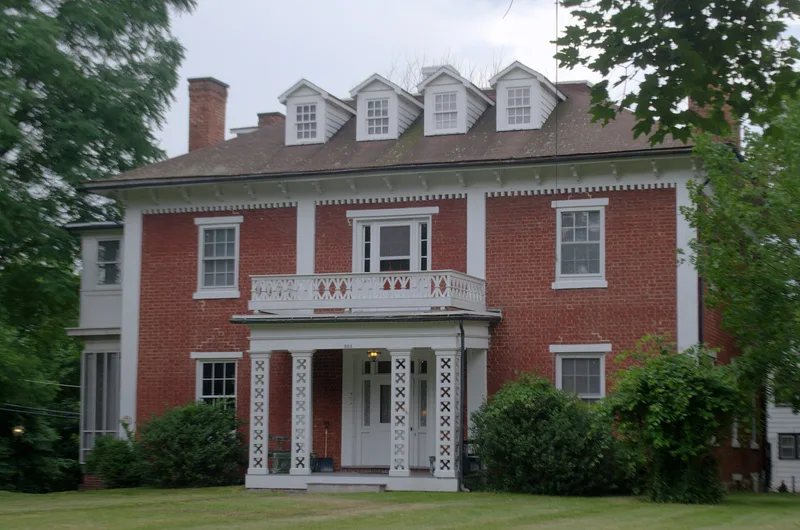
Rosedale is a neighborhood on the west bank of the Jackson River, across from Covington, Virginia. It began as part of the McAllister family farm. Its oldest building, Rose Dale, dates from the late 1850s and gave the area its name. In 1899-1900 A. Addams McAllister laid out the suburb. The same year he sold a large tract of the family land to the West Virginia Pulp & Paper Company (now Westvaco), and the mill later built housing for senior officials on Midland Trail. The district contains 94 resources, of which 79 contribute to its character. Most are detached houses built between the 1890s and the late 1940s, in styles including Queen Anne, Colonial Revival, Tudor Revival and Craftsman bungalow. Several are mail-order kit houses from Sears and Aladdin. Historic garages, a concrete arched bridge, open river fields and stone retaining walls add to the setting. The largest building is the former hospital, now a county office building. The neighborhood largely took its present form by the late 1930s.
Machine-generated summary. This summary was generated by a language model from the official nomination document and has not been reviewed line by line by an editor. It may contain errors. Check the source document before relying on any detail. Source: nomination document (PDF) · catalog entry. Generated October 2026 (model claude-sonnet-5-5, prompt v1.0-2026-10-29).
| Styles | Greek Revival, Queen Anne, Classical Revival, Spanish Revival, Colonial Revival, Tudor Revival, Craftsman/Bungalow, Modernistic |
|---|---|
| Areas of significance | Architecture, Commerce, Industry |
| Acreage | 43 |
| Boundary source | NPS cultural-resource GIS polygon |
| Full listing page | Rosedale Historic District (property record) |
What listing means for this property
This is a historic district. Buildings within its boundary are either contributing (they add to the district's significance) or non-contributing. Owners of contributing income-producing buildings can claim the 20% federal rehabilitation tax credit; homeowners should look at state credits. National Register districts impose no design review by themselves; a local historic district ordinance, if one exists, does (the difference explained).
General information, not legal or tax advice. Rules change; confirm with your State Historic Preservation Office or a qualified adviser.